

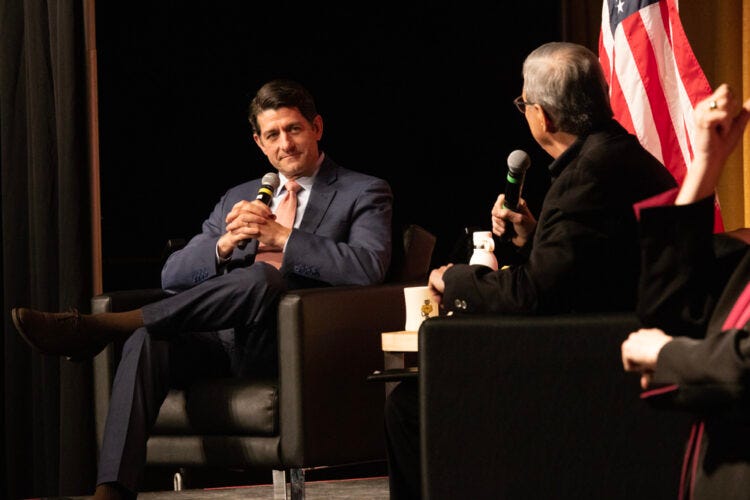
I once took the train from Baltimore to Milwaukee to watch Charlie Sykes interview Paul Ryan at the University of Wisconsin–Milwaukee. I had just graduated from the political communications graduate program at American University. I had conducted a content analysis on Sykes’ work at the Bulwark, and I had come to genuinely admire him. He had spoken out against Trump in 2016 when his side wouldn’t, and I was the kind of student who thought intellectual courage from inside a movement was the highest political virtue. The trip was, in its way, a pilgrimage.
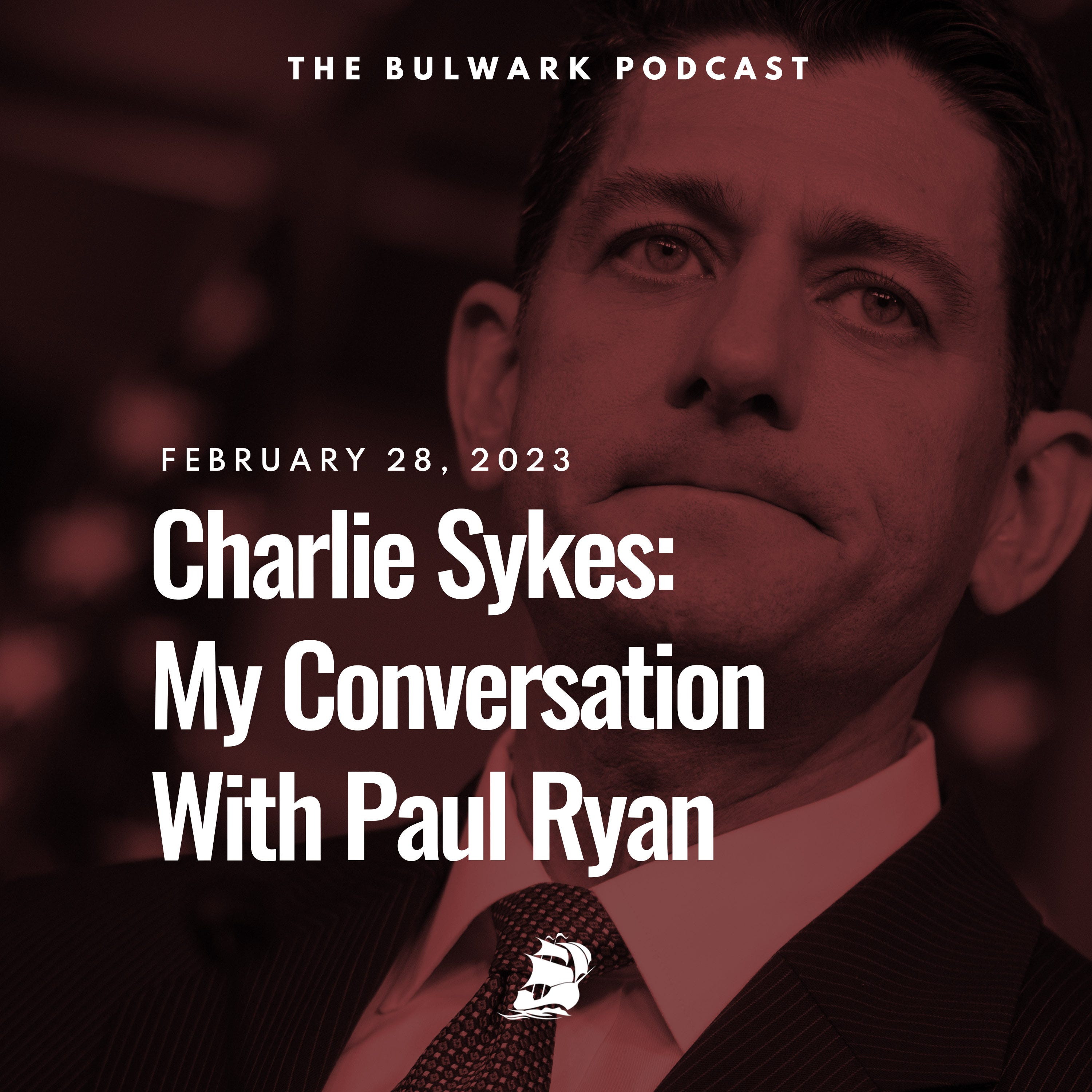
Charlie Sykes also has a darker history. He was one of the main engines of Trumpism, having spent more than two decades pumping grievance and coded supremacy politics into the Milwaukee airwaves before Trump ever rode an escalator. According to assessments by people who watched Wisconsin at the time, there would have been no Scott Walker without him. The talking points that catalyzed Act 10, the school voucher fight aimed at Milwaukee’s majority-Black public schools, the welfare-state critique that gave Wisconsin conservatism its racial vocabulary without ever requiring it to say the words, were the infrastructure that undergirded his show.
And yet, having met him and listened to him for years, I think Sykes is genuinely a good man — a good man who was part of a toxic political communications assembly line. He is well-read, witty, and one of the smartest voices in the Never-Trump constellation. But his opinions increasingly come off as inaccurate artifacts of a political moment when America felt triumphant but didn’t notice, or didn’t want to notice, what it was doing to its own people to sustain that triumph.
In this episode of Reality Checking the Bulwark, Evan and I have decided to analyze the individuals who comprise (or once comprised) The Bulwark. Charlie has since left and now writes his own Substack called To the Contrary, which is worth following. But we often find ourselves frustrated by takes that come off like stale Cold War microwave food: a punch to the left, a claim to the lost nobility of the right, reheated and served as fresh analysis.
In my harshest reading, I find myself wondering whether Charlie sits in a longer American lineage, whether he is one in a line of useful idiots for the neo-Confederate cause, men who used Edmund Burke and the language of prudence and gradualism to intellectualize something far darker and far more ancient to American life. The Milwaukee suburbs whose worldview his show served were not generic conservatives. They were the geographic and political descendants of an American racial settlement, and the philosophical machinery he supplied them with, one of order, responsibility, and the warning against utopian leveling, was, in its functional effect, the same machinery the post-Reconstruction Redeemers had used a century earlier to dress an older project in respectable clothes.
I still recommend Charlie’s commentary with a grain of salt, and so far, he still recommends Stew On This. But I am wary of him and others in his category of political storyteller because their continued usefulness to the national discourse seems to depend on a strident retelling of a noble Reaganism rather than on an accurate historical record of where Trumpism actually came from. The story has a hero, and the hero is very much like the storyteller.
I present to you: Reality Checking the Bulwark — Charlie Sykes.
Join us Next Time for Reality Checking the Bulwark - Tim Miller
Please read the companion piece as well:
What the Storytellers Cannot Say

The conventional wisdom among the commentariat is that because of inflation and anti-incumbent energy internationally, Democrats were destined to lose in 2024.
Author’s Note: I am now writing under a pseudonym, Deuce Davis.
Learn more below.
Previously on Stew On This:



Thank you Heather Olivier, Leonardo Wassilie, M Hope, Pam Wade, Upstart Raven, and many others for tuning into my live video with Evan Stern! Join me for my next live video in the app.