

The Wrong Lesson from Budapest
The American press wants Hungary's election to be about us. It isn't.

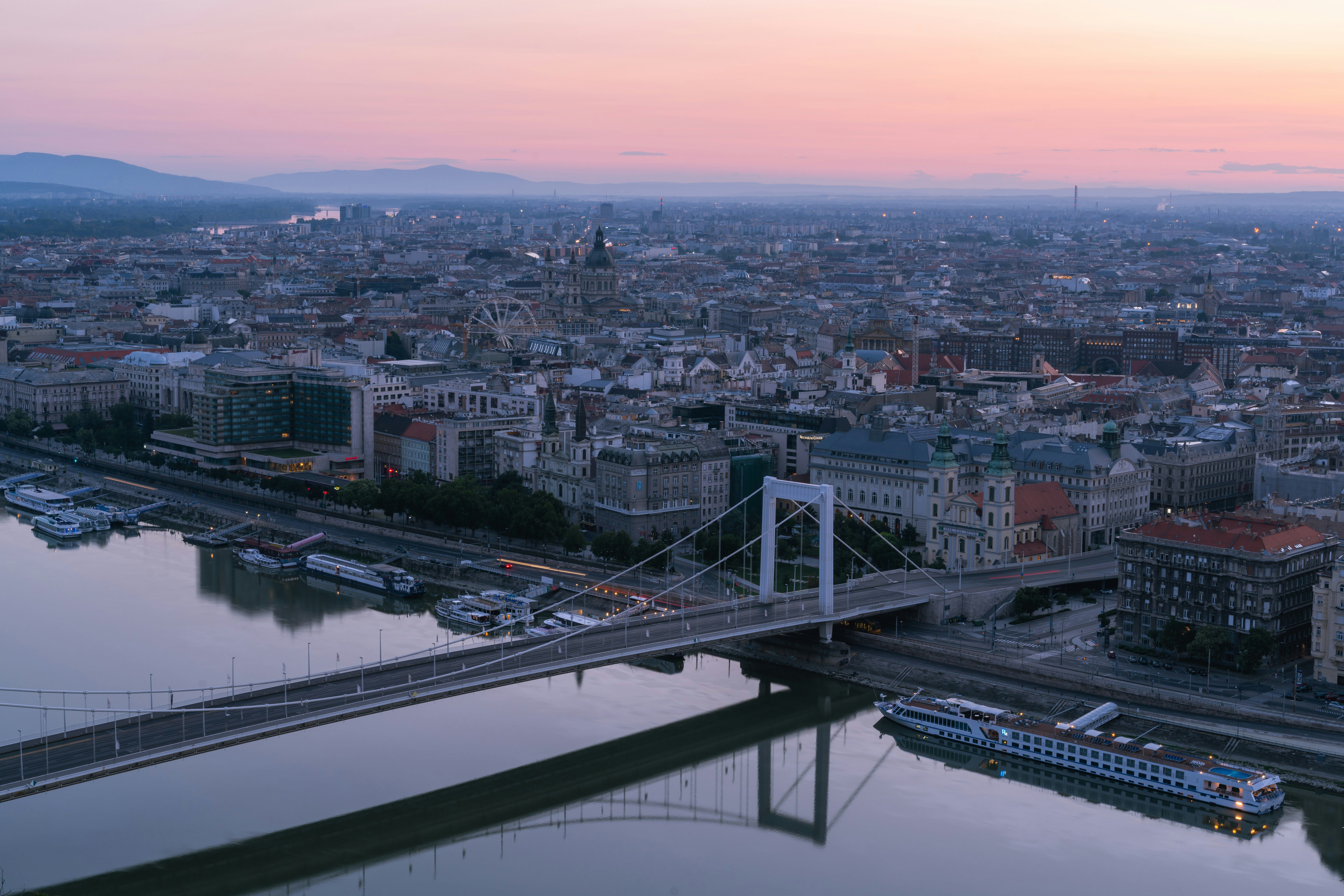
The reception to Viktor Orbán’s loss in Hungary has been treated as a seismic shift, and in narrow terms, it is. He reigned for 16 consecutive years. He systematically restructured Hungary’s electoral maps, judicial appointments, and media landscape to entrench his party’s dominance, thus earning the EU’s designation of Hungary as a “hybrid regime” rather than a full democracy. The fall of a man that entrenched does count as a shift, and it deserves to be taken seriously on those terms.
But the American press is doing something else entirely. It is eagerly framing events abroad in an American context rather than one native to the nation the news is emanating from, and in doing so, it is producing a story that is emotionally satisfying and analytically hollow.
Viktor Orbán had become something of a patron saint for the nationalist populist right globally. The connections run through actual pilgrimages. Tucker Carlson traveled to Budapest multiple times to conduct fawning interviews, presenting Orbán’s “illiberal democracy” as a civilizational model worth studying. CPAC held its conference there. In the final days of the campaign, Vice President J.D. Vance flew to Budapest to personally stump for Orbán, while Trump called in by speakerphone to a campaign rally declaring “I’m a big fan of Viktor, I’m with him all the way.” The intervention drew sharp criticism from European allies and American foreign policy establishment figures alike, alarmed at an American administration openly backing a Putin-aligned leader inside the EU.
But here is what most of those headlines are not telling you about the man who actually won.
Péter Magyar is not a liberal. He is not a progressive and he is not a rebuke to the ideological content of Orbánism. He is, in the most literal sense, a product of the Orbán machine. Born into Hungary’s post-communist Christian-democratic elite, he attended the prestigious Pázmány Péter Catholic University, where he befriended Gergely Gulyás, who is currently the chief of staff in Orbán’s own prime minister’s office. Magyar joined Fidesz, Orbán’s party, and rose through its affiliated structures, eventually heading Hungary’s state student loan provider and sitting on the boards of multiple state companies. His ex-wife, Judit Varga, was Orbán’s minister of justice. Magyar did not emerge from some underground resistance. Instead, he emerged from the front row of Orbán’s own rallies.
He broke with Orbán in 2024 not over nationalism, not over immigration, not over the EU’s democratic standards, but over a child abuse pardon scandal that implicated the government in covering for one of its own. The catalyst was moral revulsion at corruption so brazen it had become impossible to rationalize. And his campaign message was essentially: we share the nationalist feelings, but the corruption has become indefensible.
Do not be fooled by the European People’s Party membership or the crowds waving EU flags. On the policy substance, Magyar’s Tisza party opposed sending weapons to Ukraine and voted against a loan to Kyiv. It is opposed to Ukraine’s accelerated EU accession. On immigration, Magyar ran explicitly to Orbán’s right by promising to end even the guest worker program that Orbán had permitted. Magyar's nationalism expressed itself not in the civilizational warfare language of Orbán and Vance, but in something more coded with rallies named after medieval Hungarian saints, symbolic marches on the anniversary of the 1956 revolution, and a ceremonial walk to ethnic Hungarian communities in Romania. The dog whistle was tuned to a different frequency, but the underlying nationalism was not.
Magyar won against extraordinary structural disadvantages. Over sixteen years, Orbán had transformed Hungary’s public broadcaster into a party mouthpiece and presided over the consolidation of nearly 80 percent of the country’s media under Fidesz-aligned ownership. That Magyar built a supermajority despite this (through relentless grassroots barnstorming that included the campaign visiting hundreds of towns, sometimes six in a single day) speaks to the depth of the corruption fatigue, not to a fundamental ideological realignment. Yes, Magyar’s Tisza party now holds a two-thirds parliamentary supermajority, which gives it the numbers to begin reversing some of Orbán’s constitutional changes. But the political soil in which it is governing, like the hostility to Ukraine, the restrictionist immigration consensus, and the vagueness on LGBTQ rights, remains largely intact.
This is why it is irresponsible to frame tonight as a loss for MAGA. To do so is to mistake a man for a movement, to treat one leader’s political mortality as evidence that the structural forces animating early 21st century ethnonationalism have been checked or reversed. Those forces of economic dislocation, demographic anxiety, and the collapse of faith in liberal institutional competence did not lose an election in Hungary last night.
What Orbán’s loss may genuinely signal is something more specific and more modest: that fatigue is real. That sixteen years of the same face, compounded by corruption so open that it became the texture of daily life, will eventually breach even the most carefully fortified political machine. Hungary’s turnout hit nearly 80 percent (the highest since the end of Communist rule) driven substantially by young voters, 60 percent of whom backed Tisza, and by former Fidesz supporters who had simply had enough of the graft. That is a story about the shelf life of a specific man’s grip on power, not about the retreat of the ideology he embodied.
Whether that lesson has American applications is a genuinely interesting question. But the answer requires a much slower and more structurally honest analysis than the one being offered tonight. Orbán’s loss does not slot neatly into an American context. It does not allow us to conclude that MAGA’s political authority is approaching its end. The emotional need for that conclusion is understandable. The analytical basis for it, examined carefully, is not there.
This is not an attempt to extinguish hope. It is a request for a smarter conversation that takes Hungary seriously as Hungary, rather than as a prop in a story we were already telling about ourselves.

Maryar comes from Fidez, the party of Orban, he is of the same disposition ad Orban except that he isn't corrupt, pro Putin. Nor is he parading a Christian Nationalist, however he is not progressive, he shied away from culture war issues, something the American Democratic Party should pay attention to.
Shying away from culture war issues doesn't mean capitulation or going over to the dark side, if you win you can still respect human rights, just don't make a big thing out of it.
The one point that he and Orban have in common, is something that the American left can't grasp because American left, rabidly insists on ideological purity, and the problem with that is who the fuck is in charge of determining what is the ideology. A bnch of bored college students siting around Diogenes Landern drinking coffee and trying to impress each other, or some numb nutz professor with grandiose ideas about himself.
Here is how Magyar won, he did not alarm the populace, He did not say that he would reverse Orbans immigration policies, in fact he will maintain them.
TheAmerican left has a problem, a conceptual one, a mental one, for them immigration is the same world over, poor suffering people fleeing hunger and conflict zones, they need to be welcomed with open arms and given succor, shelter, food, jobs
It isn't that simple. What Americans don't understand is that some culture are incompatible, they are oil and wastern they need an emulsifier, and when one is introduced, neither oil or water are the same, they are something new.
Some cultures are highly resistant to emulsifiers. The so called western culture is js not, it has been emulsified many times, but not without strife, destruction of property and loss of life, but it has been changed, the enlightenment is one example. The westward expansion and the need for labor and settlers, the influx of immigrants, most of whom came from the same basic culture, just different expressions.
Europe is under threat from an alien culture, one that tried to impose itself twice, first time at the battle of Tours in 732 CE , second time at the gate of Vienna in 1683.
That culture is no liberal, it is fatalstic, deterministic, and intolerant of free thought, independent free form females, and LGBT. Just like the present MAGA/Christian Nationalism.
Refugees from war and poverty were swarming into Europe from Syria, Afghanistan, the Levant, and with them a culture that was overwhelming and threatened to replace the culture of Hungary.
Hungarians were alarmed and demanded action, so Orban gave hem action, he built a fence to keep them out and started his own ICE program.
This is bound to rankle the feelings of progressives,, raw unbridled racism, a Catchall phrase that has political import, but it is also cultural preservation.
We all know or know of Muslims, who are great people, who we work with,play with, drink coffee with or see on TV, and most Muslims behave just as the best of us behave.
When you are a guest in someone else's house, you are on your best behavior, they still cling to their beliefs, their traditions, and I'm sure that in many cases were congregated in ghettos, still practice Sharia law, within their community, which is fine so long a it doesn't violate our civil law or condone female genital mutilation, which still occurs among Somalis, but much more limited, same with honor killings, neither of which by the way are condoned in Sharia Law.
Orthodox and c conservative communities observe Halacha law, which is essentially the same as Sharia Law.m and there is no uproar.
If the current crop of Evangelicals, Christian Nationalists, Dominionists, 7 Mountains Mandate, New Apostolic Reformation, People of Prayer, Opus Dei, encapsulated by the Heritage Foundation-Federalist Society, they will make the Sharia of the Taliban look liberal.
Anyway Hungary faced their culture being overwhelmed by an alien, and incompatible culture, Orban put a stop to it, but kept on going into a kakistokrcy, just like the Republican Party, self serving, self dealing, a plundering police state, and that was too much for the Hungarians, but it doesn't mean a full stop reversal.
And the straw that broke the camels back, was his butt licking of Putin, one of the battle cries of the people was Russia out.
Thank you, Stew. I’m happy for the citizens of Hungary. Magyar governs by coalition a nation that will never be more united than it is today. Will they keep their renascent democracy? I hope so for our sake as much as I do for theirs. Magyar was the hardest working of Orban’s opponents and very likely also the most courageous. As the leader of a coalition he will have to “compromise”, a dirty word to ideologues who in their orthodoxy can’t wait a day or two before judging and directing another nation on, as Franklin put, “keeping” its democracy. (High minded American exceptionalism is what I call this national elitist prejudging.) Today we should be learning from Hungary. Not the other way around.