

Iran and Its Talking Points
Who Insures the Strait?

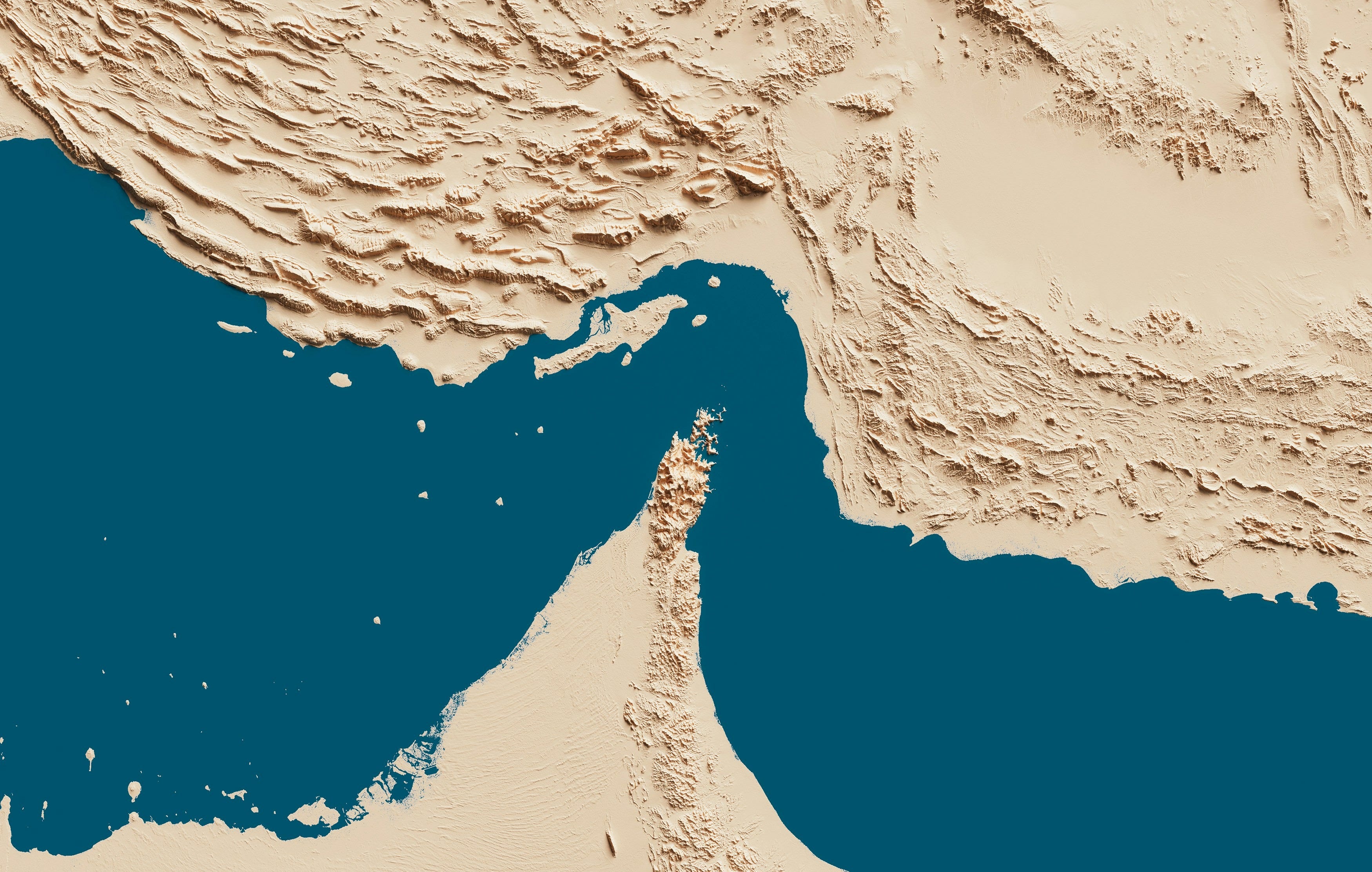
There are two narratives that I have come across. Trump-adjacent spokespeople are dispelling the popular notion among anti-Trump groups that Iran has humiliated President Trump because it shows its control over the Strait of Hormuz. Actually, the entity that controls the Strait of Hormuz is the insurance underwriting industry in London. When the U.S. and Israel struck Iran in late February, the consequence that actually paralyzed the waterway was not a blockade but a financial one: all twelve members of the International Group of P&I Clubs, which is the risk pool that covers roughly 90% of the world’s oceangoing tonnage, cancelled certain war-risk coverage on 72-hour notice, and traffic through the Strait fell by about 95% from its prewar average of 178 ships a day. That is a sign that the situation is more complex than a buzz phrase circulating on the Never Trump circuit.
Still, there is a sleight of hand in that assessment. The reason insurance premiums have skyrocketed from about 0.25% of a vessel’s value before the conflict to somewhere between 3% and 8%, or $3 to $8 million for a single large tanker crossing, is the actions of the U.S. in that region of the world and Iran’s promise to retaliate against ships crossing the Strait. The underwriters are a transmission mechanism that converts Iranian threat into dollar cost and not an independent variable. There have been several administrations of the past, both Democrat and Republican, who knew this risk and thus averted the aggressive option when contemplating how to deal with Iran’s nuclear ambitions and proxy forces throughout the region.
The anti-Trump narrative is that Iran has shown that it has a weapon that can weaken the U.S. superpower, which is control over the Strait. That is also playing narrative games, because yes, Iran has made Hormuz into a prickly gambit due to its geographic positioning and its promises of threats. What Iran has demonstrated is a negative power, or the capacity to deny, disrupt, and impose cost without firing many shots. However, Trump is not necessarily showing weakness because of this development. With the U.S. having convinced the International Development Finance Corporation to underwrite ships moving in and out of the Strait in an attempt to somewhat stabilize oil prices, the keys to who insures the tankers that supply nearly a quarter of the world’s oil are now with the U.S., at least for the time being. This is on top of the fact that the U.S. is a global leader in oil exports. This means that oil consumers (including Americans and Iranians) are feeling the crunch, but America’s strategic position as a net exporter is elevated in the macro sense. With the DFC backstopping up to $40 billion in oil movement, with Chubb signed on as lead partner, this also shifts U.S. leverage away from insurers in London, allowing the U.S. to dictate oil patterns to some degree.
The Never Trump line can be considered a rhetorical overreach, just to once again spin a narrative of Trumpian incompetence rather than of power exercised with precision and self-aggrandizement.
The U.S. may not be acting in ways that benefit the average consumer, but it is acting like a rentier power that is now aiming to control the toll booth in the Strait of Hormuz. Look at what Secretary of State Marco Rubio is actually negotiating. He is advocating for no Iranian nuclear weapons, the Strait reopened without tolls, and enriched uranium turned over. Underneath all of that is the transition of the U.S. into the insurer of last resort. That is a big structural shift happening under Trumpian policy, and it cannot be summed up as Trump looking weak due to an instinct to oppose the president’s every whim.
This is not me being a Trump administration stan, but rather an attempt to parse out what makes the Never Trumper instinct a weakness for understanding how Trump-adjacent and Trump-friendly minds and political identities may view the Iran story. They will likely give Trump and his team the benefit of the doubt and look for nuanced reasons why Trump's actions served U.S. interests, just as the anti-Trump side looks for nuanced reasons why they did not. Both are doing the same motivated work from opposite ends. After years of existing in this era, evolving from a Never Trumper to now just a narrative skeptic, I wanted to really look at the Iran story and question whether the conventional bad-polling, "it's the economy, stupid," and "this offends the anti-war Trumpers" line of thinking may have some flaws, and some psychological attachments that need everything Trump does to be bad.


Spot on about the insurance. However the IRGC are not collecting tolls, but fee for service,. That service is the safe transit and guidance of the Strait of Hormuz, which can only be had if they use the IRGC traffic lane that runs base Qesh and Larak Island.
The pre war traffic lanes ran through the middle of the strait there was an outbound lane and an inbound lane, apparently, or supposedly, those lanes have been mined.
By the way mining of the lanes is easy. The Gulf of Persia and the Arabian Sea all the way down to Africa is full of fishing vessels called dhow's, these vessesl also lay mines, and you can't tell a fishing vessel from a mine layer, and they could be fishing and mine laying at the same time, and usually are.
There is another lane, but it is risky it parallels the shore and skirts the coast of Oman, however it is hazardous and not deep enough for super tankers which have a draft of 66 ft.
The situation is now complicated, as the SOH is the territorial waters of Oman and Iran, and the two have come to agreement as to fee spiting.
Trump has threatened to wipe out Oman, which would mean attacking a member of the GCC, also an Arab and Muslim state.
Trump has lost the war he started, and is caught in a dilemma, one caused by his friend Bibi.
He is looking for an off ramp, but Bibi won't give him one. Bibi wants him to use ground troops and invade Iran to capture the nuclear material.
This will be a disaster, and the loss of thousands of lives. There will be thousands of weeping widows in Fayetteville, NC.
Iraq was a desert country, flat with nothing but sand, Iran is a mountainous country, with reinforced tunnels and caves, overlooking the cities. And the Iranians have been digging out all of the destroyed missile launch sites.
The only way to get to the nuclear material, or where they think it is, is by a ground invasion, through valleys under the guns of the Artesh,and IRGC or by an airborne assault.
And that would be a disaster worse than the D Day drop on San Mere Eglise, the British Airborne assault, on top of German Panzer regiment in Operation Market Garden, or the Fallshirmjager assault on Crete,or the French Foreign Legion drop on besieged Dien Bien Phu.
And then they would need heavy equipment to clear out the tunnels which the USAF bombed on Feb 28th.
And it is doubtful that many of the C-17's or C-130;s that airdropped men and equipment would survive, as they have to slow down to 130 knots for the airdrop and start their slow down 6 minutes from the drop zone.
Flying at 1,000 to 1,500 ft at 130 Knots that can be shot down by small arms fire,and RPG's, not to mention shoulder fired anti aircraft rockets.
Trump is an idiot,and he put an idiot in charge of the Dept of Defense and selectecd a craven idiot ass kisser as Chairman of the JCS, and the generals and flag officers in charge, that haven't retired after he debased them at that infamous Quantico haranguing, are guilty of all crimes that Trump is directing them to commit.
Whatever ‘the plan’ is, it is failing so far and to the great detriment of the strategic position of the US, regardless of the fact that US oil companies are making a killing.
The insurance companies and the countries will eventually settle with Iran and Oman over strait fees because they have to. That is what never trumpers are pointing to: the fact that there was a war and Iran came out of it, at least up to this point, with even more leverage than before, which amounts to a strategic loss while impoverishing the American consumer. And there are also other consequences that cut deeper, for example Italy’s switch to airbus and the Netherlands blocking the acquisition of the Dutch ID data company by a US company.
All those great insurers and companies have leverage as long as the US economy has leverage. But Trump is hacking away at the load bearing beams, so the next round will involve Chinese insurers and data companies, good luck with that. I cannot say it makes me happy but it is what we have done to ourselves. There is no one else to blame but us.
Trump is also shelving arms sales to Taiwan, running the credit card like there is no tomorrow and behaving in general like a demented orange monkey.
Having spent my life listening to these critiques stoically, the not serious part of me is reaching for the popcorn to watch them collapse along with what sustained them.