We Need to Talk About Iran


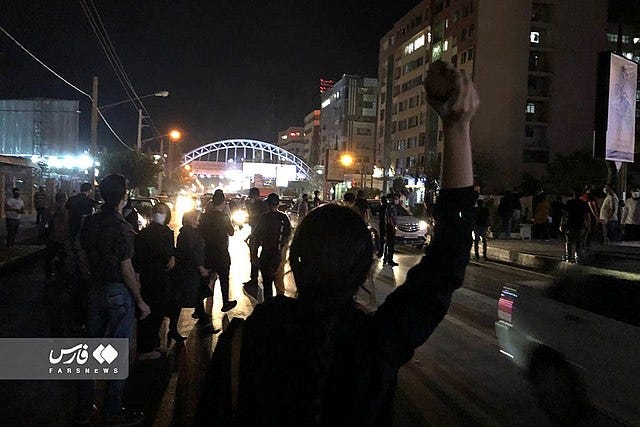
Iran has long been the site of humanitarian abuses beyond imagination. The country is reeling from a recent period of direct escalation with Israel, alongside U.S. strikes on Iranian-linked military assets. Sanctions have hollowed out the economy, the currency has collapsed, and inflation has shredded everyday life. Civil liberties have been treated as an afterthought under an absolutist theocratic regime, and yet once again, people are risking everything to demand change.
These are the largest protests since 2022, when nationwide demonstrations erupted after the death of a young woman, Mahsa Amini, detained by morality police over alleged hijab violations. That moment became a symbol of misogyny, coercion, and a system that demands cultish loyalty from women to sustain power. Today’s protests are broader, angrier, and unfolding under even darker conditions.
This is where I find myself returning (uneasily) to my more bullish instincts about America’s role in the world.
I’ve spent this week criticizing political ideologies like neoconservatism, and I stand by that critique. But I also understand the impulse to want America to mean something more than a global behemoth that projects power through markets and missiles alone. We have our own history of protesters being brutalized and killed at home, and that reality must never be minimized. Still, rights groups are reporting that hundreds of people may have been killed in Iran, even as a regime-enforced internet blackout makes verification difficult and hides the full scale of the violence.
Iran’s leadership has made clear it intends to show no mercy to dissenters. At the same time, critics of the Trump administration have warned that his rhetoric toward Iran, especially threats or displays of force, can endanger protesters by allowing the regime to frame them as agents of foreign influence. That concern is real and deserves to be taken seriously.
But another instinct at work right now also deserves scrutiny: the reflex to downplay or dismiss any U.S. action, posture, or pressure simply because acknowledging it might be construed as helping Trump politically. That instinct doesn’t just flatten analysis; it risks erasing the lived reality of people whose survival does not hinge on our domestic narratives.
With reliable information constrained and brutality unfolding in the shadows, people around the world look for some signal that self-government is still possible. This doesn’t mean suspending criticism of power. It means remembering that the office of the presidency is supposed to represent an ideal larger than any one person, even, and especially, when the person occupying it falls short.
I say this with no nostalgia.
I was raised on American exceptionalism, the same Kool-Aid I now watch many centrists continue to drink in an age of permanent uncertainty. But I was also raised Black, living in a country where my skin alone could criminalize me, in a nation historically hostile to my rights. And yet, even in that contradiction, there were bright spots, moments when the promise felt real enough to reach for.
This moment shouldn’t be about denying political figures any acknowledgment out of spite, nor about inflating their actions into moral triumphs. It should be about whether the institutions of democracy can still function as an example when people elsewhere are bleeding in the streets of Persian cities. I hope this administration avoids actions that would cause regional blowback or deepen instability, as so many past administrations have done. This cannot be another exercise in energy grabs or neocolonial calculation carried out with indifference to the people on the ground.
At the same time, the idea of America has to survive beyond contemporary theatrics and present circumstances. That idea doesn’t live in a single leader; it lives in us, in whether we can keep democratic institutions running, tell the full story honestly, and hold complexity without retreating into tribal reflexes.
We can acknowledge outcomes without worshiping their authors. We can name abuses without denying reality. And we can insist on telling the whole story (the dark and the light) if America is ever to confront its own demons and still offer something meaningful to those struggling under regimes far more openly brutal than our own.