
They Don’t Oppose the Logic.
They Oppose the Sloppiness.

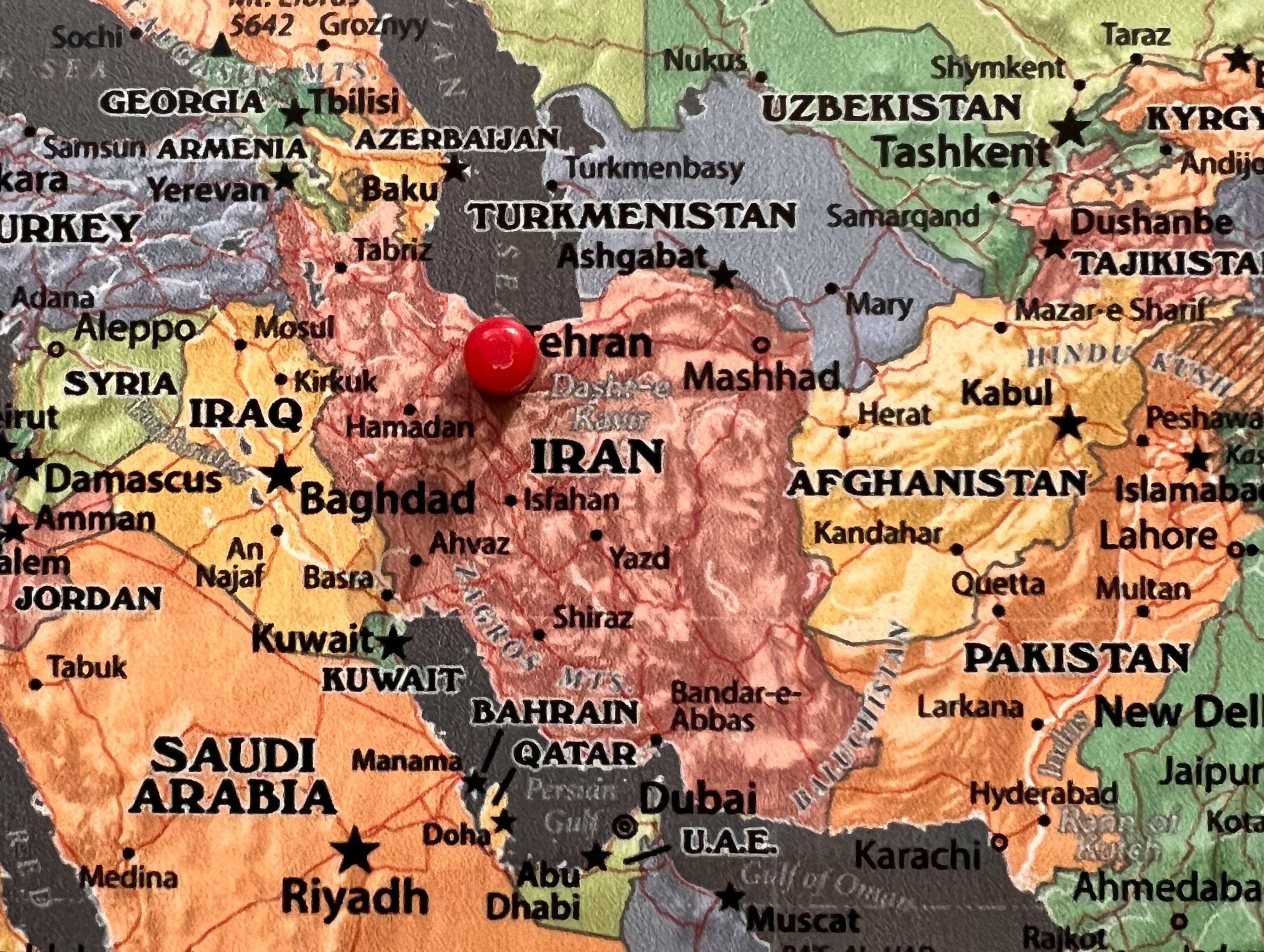
With the United States at war under President Trump, and directly at war with Iran, a nation that has sat at the molten center of U.S. foreign policy for more than half a century, there is reason to suspect that this conflagration will reveal something many pundits, still trapped in the old grammar of American political discourse, are primed to miss.
Listening to the Never Trump Neoconservatives and Other Reactionary Centrists
A familiar complaint has emerged from the Never Trump right and the broader reactionary-centrist world: there is no clear direction in this war, no coherent articulation of its aims, no proper White House address, no serious effort to make the case to Congress or the American people. That criticism is not baseless. Trump’s administration has offered shifting and often contradictory explanations for the war, while the president and his surrogates have stumbled between bluster, denial, and improvisation. At the Bulwark, Bill Kristol argued that Trump failed to explain why the war had to begin now and failed to seek congressional authorization, while Joe Perticone similarly wrote that the administration had done little to convince Congress or the public why the conflict was necessary or even what it was for.
But this is where the dissonance enters. Too much of this criticism is not really a rejection of the logic of American militarism. It is a rejection of Trump’s vulgarity, incoherence, and inability to dress that logic in the language of prudence and institutional seriousness. In other words, the complaint often sounds less like “this war is rooted in a destructive imperial tradition” and more like “this is not how respectable people are supposed to sell a war.”
That distinction matters. Because what is so striking about this moment is how often anti-Trump hawks seem to imply that the real scandal is not coercive U.S. power itself, but the lack of procedural polish around its use. In one recent Bulwark piece, the discussion highlighted Pete Hegseth’s argument that this war would go better than the wars in Iraq and Afghanistan precisely because it would avoid “nation-building,” “democracy-building,” and other long-term entanglements. The fantasy underneath that framing is old and familiar, which is that the problem with Iraq was not the imperial arrogance, deception, and regional destruction at its core, but rather the way it was managed, extended, or overcomplicated.
That is the old trick in a new outfit. Empire with a cleaner haircut, war with better branding, and catastrophe in a necktie.
Listening to Progressives and Other Disaffected Americans
This is why I find progressive and anti-imperial critiques more convincing, even if they are not always politically dominant. From that vantage point, the Iran conflict is not some shocking rupture with American history. It is another reaffirmation of it. Another example of American power centers serving elite interests, protecting regional hierarchies, accommodating Israeli escalation, and sustaining the military machinery that has structured American public life for generations.
Seen from that angle, the moral scandal is not merely that Trump is a hypocrite who once marketed himself as hostile to forever wars. The scandal is that the United States remains so ready, across administrations and ideological styles, to use overwhelming force while presenting itself as the guardian of order, democracy, and civilization. The language, stagecraft, and press strategy change, but the underlying habits endure.
That is why the current moment should be approached with fear, caution, and sobriety, but not surprise. The polished sheen of respectability has worn off in the Trump era. The machinery beneath it has not.
My Takeaway
The Iran conflict is another mask-off moment. It shows not only how Trump exploits a fragmented civic culture by flooding the zone with propaganda, contradiction, and spectacle, but also how easily American institutions still bend around executive force when it is wrapped in the rhetoric of security and necessity.
That is what makes some centrist and Never Trump commentary so frustrating. Even when it is correct to call out Trump’s lawlessness, recklessness, and incoherence, it too often slips into a kind of procedural nostalgia. The argument is that a war like this should have had a clearer rationale, a stronger public case, more consultation, better sequencing, and greater institutional decorum. But the problem with Iraq was not that it had better manners. The problem was that it was a disaster built on lies, hubris, and imperial delusion.
So when commentators imply that this Iran war would be more acceptable if it had clearer messaging, more congressional choreography, and more polished war aims, they are not truly breaking from the tradition that led to Iraq. They are laundering it.
Even where some Bulwark writers have drawn explicit parallels between Trump’s rhetoric on Iran and the deceptions that surrounded Iraq, the broader tendency in that orbit still leans toward treating the loss of elite competence as the main tragedy. But Iraq was not a regrettable deviation from responsible American statecraft. It was one of the proving grounds for the habits of deception, impunity, and regional destabilization that now haunt this Iran conflict.
That is why it is not enough to say Trump is handling the war the wrong way. The deeper truth is more damning: this crisis is also the child of an older political tradition that mistook procedural polish for moral legitimacy and treated imperial violence as tolerable so long as it was narrated by people in suits saying democracy every third sentence.


Here goes. I put my iron in the fire, FWIW.
I consider myself a progressive, a consistent one, not a conditional one, when it suits my ideology, of which I have none.
The mullahcracy that rules Iran is an abomination, and I am thrilled that Khameini, the slaughter of youg girls is dead, I only wish Israel got his second son as well.
As a progressive I find Islam to be abhorrent, it is triumphalist like Christianity, it is is intolerant of non believers, (however it allows room for Peoples of the Book, Christians, Jews and Zoroastrians In Iran, if they accept 2nd class status, and until the 19th Century paid the jizzyah a poll tax.
Feminist, self invaliding females, queers, atheists, polytheists, not only unwelcome but at risk of lfe. None of them would last 24 hours in Iran, Palestine, Iraq, Saudi Arabia, except in special, desacralized enclaves.
With that off my chest, there is no way to defeat Iran, and no way without boots on the ground to affect a regime change, and Iran can and has closed all shipments through the Strait of Hormuz (SOH) to all but Chinese and Pakistan, and there is nothing we can do about it.
On the second day, Hegseth sank the Iran Navy, at anchor, but the Iranian Navy has always been just for show.
The real threat is the IRGCN, they have 33,000 fast boats that hold 15 men each, suicide drones, suicide swimmers and IRGC.
WWIII has already started. Iran has sent Missiles and drones against 18 countries, and in no way have they expended all of their missiles, rockets and drones.
They have been planning for this for decades, and have them stored away in caves.
Iraq is flat desert,Iran is mountainous.
The Iranian Revolutionary Guard Corps,numbers about 150,000 and they are fanatic, but even more fanatic is the millions of Baiji, the Basij is a volunteer militia, fanatic Shia, it was the Basij that killed the protestors, 50,000 of them, not the IRGC and the Basij could be the guy selling coffee,or rugs in the bazaar, or leading a donkey cart through the streets.
During the Iraq Iran war, they used young boys as mine detectors, telling them that they would get a fast pass to paradise.
Christians actually fear death, Muslims wish to die a martyr, to die for Islam is to get a fast pass to paradise.
Maryrs' are celebrated not mourned. For an example. Hamad Ghazi, of Hamas said, before he was killed, "We are a nation of martyrs and will come back again and again"
Krasnov's BFF, Vladimir Putin, is providing target intelligence to Iran, and Trump's response, basically "so what"
As for who started it, Ha'aretz said that Bibi did, he had Israel track and target the Iranian leadership, and Trump joined in to take pressure of his other BFF, Bibi.
And this whole affair has been in the works since January, after Trump had his way with Maduro, the USS Gerald Ford hauled anchor in the Caribbean and Headed to the Mediterranean, the USS Abraham Lincoln was patrolling the South China and Philippine seas before being directed to the Persian Gulf in January.
If you want to see the action follow the carriers, this had been planned since January, actually even before that, it was set in motion in January.
“The Iran conflict is another mask-off moment. It shows not only how Trump exploits a fragmented civic culture by flooding the zone with propaganda, contradiction, and spectacle,” - Mad man theory perhaps?
From Wikipedia: The madman theory is a political theory commonly associated with the foreign policy of U.S. president Richard Nixon and his administration, who tried to make the leaders of hostile communist bloc countries think Nixon was irrational and volatile so that they would avoid provoking the U.S. in fear of an unpredictable response.[1]
And yeah I’m just throwing it on the wall to see if it’ll stick.