
The Story That Buys the Service Cheap
A Memorial Day reflection
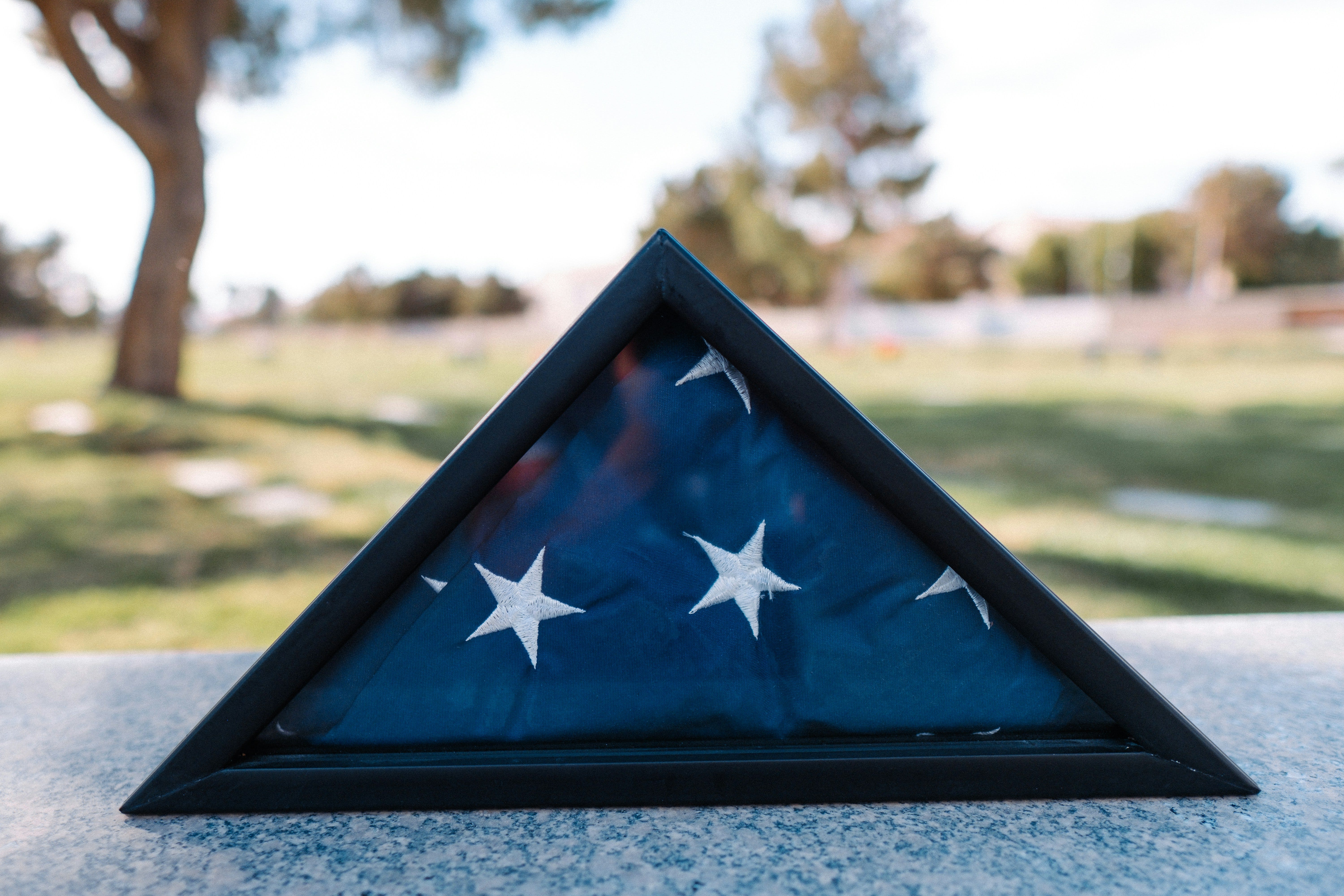
Today, the flags fly at half-staff, and the names get read aloud, and somewhere a teenager who enlisted because the recruiter came to his high school and the recruiter’s office was warmer than his mother’s apartment will be told that he is part of a tradition. That tradition is real. So is the story that surrounds it, and the story is the thing I want to take seriously this morning, because to honor the dead without examining the narratives that put them in the ground is to participate in the same machinery that will send the next generation into the next desert.
Veterans of American wars are sold narratives.
This is not a cynical claim but a functional one. Governments and armies and advertisers cannot conjure courage out of nothing. They have to tell a story about why a young man should risk dying for a piece of ground he has never seen, and the stories are constitutive and not incidental to the wars. The wars are made of the stories as much as they are made of rifles. Which is why any honest reckoning with the American military has to begin by reading the narratives the way we read any other piece of propaganda: with respect for what they accomplished, and with hard eyes about what they obscured.
The American military, like any large institution shaped over centuries, contains its own contradictions. It has been one of the few American institutions that actually delivered on its promises (particularly for Black Americans, for poor white Americans, and for first-generation immigrants), providing the health care, the education, the path into the middle class, and the sense of belonging that the broader civilian society systematically denied. It has also, when its leadership chose, been a global humanitarian network: tsunami relief, airlift, infrastructure, and medical work in places no NGO could reach. That side of the institution is real and deserves the honor it claims.
But the same institution has been, in its other face, an imperial vanguard capable of raining fire from the sky and kicking in doors at three in the morning. The army of the American nation has been as disciplined as it has been devastating, and the discipline and the devastation are not separate facts. They are the same facts, organized by the same narratives, told to the same young men, on either side of the recruiter’s desk.
Consider how those narratives have moved across two centuries.
The Mexican War sold itself to volunteers as a war of liberation. White Americans, the story went, were rescuing their fellow Anglo-Saxons in Texas from the tyranny of a Brown enemy, or so the propaganda framed it, inverting in advance the racial categories that would later be used to justify nearly every American foreign adventure. The Texans had freed themselves from one empire and now needed protection from another. Manifest Destiny did the rest of the work. Young men marched into arid heat carrying that story in their packs, and a generation that included Ulysses S. Grant looked around at what they had done and understood, too late, that they had been instruments of conquest. Grant called it “one of the most unjust wars ever waged by a stronger against a weaker nation.” He was right. He was also one of the soldiers who fought it.
Freedom did the same coded work in the war that followed.
Northern sons who had never given the African American much thought ventured into a humid country that once claimed to be part of the same nation and discovered the physical fact of slavery in ways their abolitionist newspapers had not prepared them for. Most of them were not abolitionists. Many were openly hostile to the people they were ostensibly liberating, as the Draft Riots in New York happened for a reason. But freedom was the word that organized their war effort, freedom to own slaves on one side, freedom from being a slave on the other, and the word did its work regardless of what the men carrying it actually believed. The narrative manufactured the war machine that brutalized the South back into the Union, and then, when the war was over, that same narrative was quietly retired so that Reconstruction could be abandoned and the country could move on.
By 1898, the freedom narrative had gone imperial. The U.S.S. Maine blew up in Havana harbor, and somehow, a year later, American soldiers were burning villages in Samar. The Philippine-American War was longer, bloodier, and more revealing of the American imperial character than the Cuban campaign that supposedly justified it. Worse, it has been all but excised from the national memory. The young men who fought it had signed up to liberate Cuba from Spain and ended up running concentration camps in Batangas. They had been sold one story and made to enact another. Generations later, their grandsons would be sent to the jungles of Vietnam with the same coded freedom messaging, and would come home with the same trauma their grandfathers had brought back from Luzon, except this time there was film footage, and the country could no longer pretend not to know.
Warfare is the American organizing principle. It is the glory and the power of the American promise, and it is also the shadow where our contradictions come to life on the plantation, on the reservation, in the foreign territory. Which is why the twentieth century lodged itself in the national memory as the good war, the Second World War, the arsenal of democracy. That conflict carried more geopolitical nuance than the popular retelling allows, but the popular retelling is what matters for recruitment, and it is the structure under America’s imperial self-image. Every subsequent war has been sold by reference to it. Every reluctant intervention has been framed as another Munich avoided, another Normandy authorized.
But the good war was also the war that fought European fascism with a segregated army. It was the war that interned its own citizens by race. It was the war whose Jim Crow legal codes the Nazi jurists had studied carefully in the 1930s when they were designing their own racial state. A debt, the German lawyers acknowledged openly in their drafting sessions, and one that James Whitman has documented at length. The arsenal of democracy was an arsenal of American democracy, which meant something very specific about who was inside the protected category and who was not. The good war was also the moment when American industrial capital, having spent the prior decade doing business with the regimes it would later defeat, transferred the imperial mantle from a tired British Empire to a fresh American one, with the hemispheric and racial logic of the triangular Atlantic trade still operative underneath the new institutional architecture. The Marshall Plan was many things. It was also, among those things, the smooth handoff of a global system from one Anglo power to another, with the people at the bottom of the trade pyramid in roughly the same position they had been in for four hundred years.
This is the part of the story Memorial Day does not say out loud. It cannot say it out loud, because saying it would force a different kind of reckoning than the holiday is designed to permit.
So what do we owe the dead, and what do we owe the living veterans who carry the institution forward?
We owe them, I think, an honor that includes the truth. Not less reverence, different reverence. The reverence that refuses to use them again, the way they were used before. The reverence that names the narratives for what they were, so that the next teenager standing in the recruiter’s office in a strip mall in Dundalk or in El Paso or in rural Mississippi has a fighting chance of seeing the story before it sees him. The reverence that admits the military has been, simultaneously, one of the most genuinely democratic institutions in American life and one of the most reliable instruments of American empire, and that these are not two separate facts to be balanced against each other but a single fact about a single country that has never resolved what it wanted to be.
To honor the service is to refuse the story that bought it cheaply. That is harder than the standard Memorial Day liturgy, and it is the only honor that is actually worth the name. The dead deserve it. The living deserve it more.


I served for 20 years. I turned against military intervention after Cheney and the war hawks drove GW Bush into attecking Iraq using the WMD lie. This article reflects my views, including the idiocy of starting another illegal war in the Middle East. Until we get the military-industrial complex under control, we are doomed to failure after failure! We don’t need to sacrifice our young to satisfy that complex’s needs!
Thank you for taking the time to give us this history and point of view. True patriotism starts with being alert and informed. Thanks again for all your great essays.