
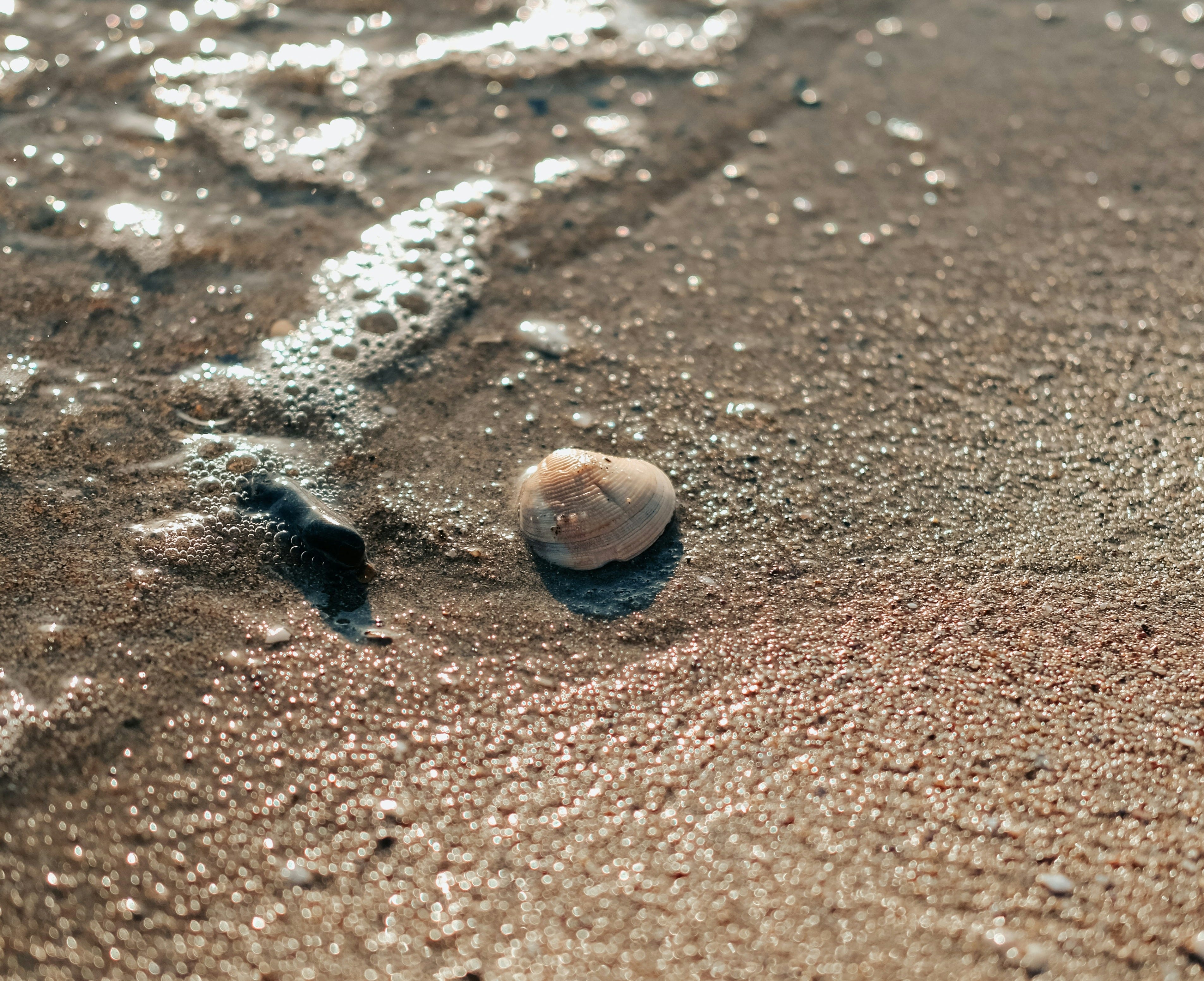
The Seashells Were Never the Point
On the Comey indictment, the commentariat’s sedative, and the architecture being built while we laugh.
The dominant take on James Comey’s second indictment is that it’s laughable. Unprofessional. Beneath the dignity of serious law. A former FBI director charged with threatening the president’s life via a beach photo via seashells is the kind of thing that writes its own punchline. And the commentariat, with characteristic efficiency, has obliged. Legal analysts have lined up to note that the case is thin. The “86 47” language is ambiguous. That no serious prosecutor would bring this. That the whole spectacle is an embarrassment to the Justice Department.
That framing feels satisfying. It is also doing real damage to our ability to understand what is actually happening.
The case is weak, and that’s not the point.
There is a widespread assumption, inherited from decades of watching courtroom dramas and reading civics textbooks, that the purpose of a prosecution is to achieve a conviction. By that standard, the Comey indictment looks like a failure before it begins. The legal standard being invoked that a “reasonable recipient who is familiar with the circumstances” would interpret the seashell photo as a serious threat against the president is doing extraordinary juridical gymnastics. It essentially imports the paranoid interpretive framework of Trump World into the definition of reasonable perception. The circumstances have to be read through the eyes of someone who has spent years being told that Comey is a traitor, a deep-state operative, an enemy of the people. Reasonable, in this context, means: afraid and primed.
But here is the thing about legal weakness that the commentariat consistently misses. This is a feature of the government’s strategy, not a flaw.
Authoritarian prosecutorial logic, and we should be precise and unsentimental about using that term, does not primarily work by convicting its targets. It works by running them. By keeping opponents in legal jeopardy long enough to drain their resources, disrupt their organizations, and signal to everyone watching what the price of visibility might be. This is not a novel observation.
The FBI’s COINTELPRO program didn’t primarily function by imprisoning civil rights leaders. It functioned by making their lives expensive, exhausting, and uncertain. Martin Luther King Jr. was arrested dozens of times on charges that were often transparently pretextual. The specific charge almost never mattered. The accumulation did.
Comey is not King. This is not the Civil Rights era. But the mechanism is recognizable to anyone willing to look at it clearly, and calling the seashell indictment “ridiculous” is a way of refusing to look. It treats the absurdity of the pretext as evidence that the effort isn’t serious. In fact, the effort is extremely serious. The pretext is just lying on the beach, waiting to be picked up.
The trial is the punishment.
The seashells were never the point.
The paranoia is real, and that matters.
Here is the part of this conversation that nobody in polite media company wants to say, because saying it requires holding two uncomfortable things in your head at once.
The White House’s paranoia is not pure performance.
There have been multiple genuine, documented assassination attempts against this president. And four days before Comey’s indictment was unsealed, there was a shooting at the White House Correspondents’ Dinner. It was the kind of event that, in living memory, was considered sacred neutral ground, a place where even the most bitter political antagonists showed up in black tie to trade jokes. That is the environment in which this administration is operating. So, the fear is real, and real fear, in the hands of people willing to use it as a legal battering ram, is extraordinarily dangerous.
This matters for understanding the Comey case because “86 47” carries a different meaning in that context.
You do not have to believe Comey intended a threat, and there is no credible reason to believe he did, to understand why a paranoid administration, with genuine reasons for its paranoia, reads it as one. Ambiguity, in an environment of real threat, gets weaponized. The interpretive leap from “beach photo” to “assassination signal” is absurd by normal standards, but normal standards are a luxury of calmer atmospheres. What the administration has done, with considerable legal sophistication, is construct a framework in which their paranoid reading becomes the legally operative standard of reasonableness, because enough people have been trained to share it.
This is the alchemy at the heart of the case, and almost nobody is talking about it. The legal commentary focuses on whether the case is weak. The political commentary focuses on whether Comey knew what “86 47” meant. Neither asks the more disturbing question: what does it mean that we live in a country where the president’s fear, however real, however justified, however instrumentalized, can be translated this efficiently into criminal charges against a private citizen for posting a beach photo?
The expert class and its protective mythology.
The commentariat’s instinct to call this ridiculous, unprofessional, and a departure from norms is not just analytically insufficient.
It is, in a quieter way, self-serving.
The professionalized expert class: the lawyers, the journalists, the former officials who populate cable panels and newsletter inboxes and congressional testimony, built its legitimacy on a particular story. The story is that the pre-Trump system was, on balance, clean, neutral, and principled. Staffed by serious people who took their obligations seriously. The guardrails held because the people inside the institutions believed in them. And Trump, in this telling, is an aberration — a corruption of something that was, before he arrived, essentially sound.
Calling the Comey indictment “ridiculous” is a way of defending that story. It’s a way of saying real institutions wouldn’t do this. This is what happens when the wrong people get hold of the machinery.
But real institutions do do this. They always have. The FBI that is now being used to chase Comey over seashells is the same FBI that tapped King’s phones, tried to blackmail him into suicide, and sent anonymous letters to his wife. The Justice Department that commentators are describing as “captured” today operated, for most of the 20th century, in ways that would curl the hair of anyone who believes in formal equality before the law. The expert class’s relationship to institutional power has always been selective in its outrage, troubled when the targets are recognizable, incurious when they aren’t.
Trump did not create the machinery of legal harassment. He pointed it in a different direction. The commentariat’s difficulty in processing this is not evidence of clear thinking. It is evidence of class loyalty dressed up as institutional concern.
What We Should Be Watching
So yes, note the legal absurdity. Appreciate the dark comedy of seashells as evidence in a federal threat case. Feel the appropriate contempt for the spectacle of Todd Blanche holding a press conference about beach formations with the gravity of a Nuremberg prosecutor.
But do not let the absurdity become a sedative.
The playbook does not require dignity. It requires repetition, resource exhaustion, and an audience too preoccupied with laughing at the pretexts to notice the architecture being assembled behind them. Every dismissed indictment that is followed by a new one teaches the same lesson, and it will keep coming. Every high-profile target prosecuted for ambiguous speech sends the same message to lower-profile people: imagine what we’ll do to you.
The question is not whether the seashell case will survive a First Amendment challenge. It probably won’t.
The question is what kind of country you are living in when the answer to that question has become a source of comfort rather than a reason for alarm. When “the courts will sort it out” has become the thing we tell ourselves to avoid confronting what is being sorted.
Comey said, in the video he posted to Substack after the indictment dropped: “I’m still innocent. I’m still not afraid. And I still believe in the independent federal judiciary, so let’s go.”
That’s a brave thing to say. It is also, right now, a significant act of faith.
The rest of us might consider spending less time on the seashells and more time asking whether that faith is being earned.


I see your point, but my take on the ridiculousness is different. I see it as a sign of a flailing structure. That indictment was either dictated by Trump or written by an AI trained to reason like Trump. It is race to the bottom pathetic in that it displays Todd Blanches cravenness more than anything else. It is true they will keep the indictments coming, and indeed that is the strategy, but so far all they have managed is to set more precedents in favor of speech, like the ‘ham sandwich’. My worry is not that, but the fact that they might switch to other more lethal tactics when the current ones become even more of a joke.
Allowed to fully rule, this administration would now give the firing squad for a seashell photo.