
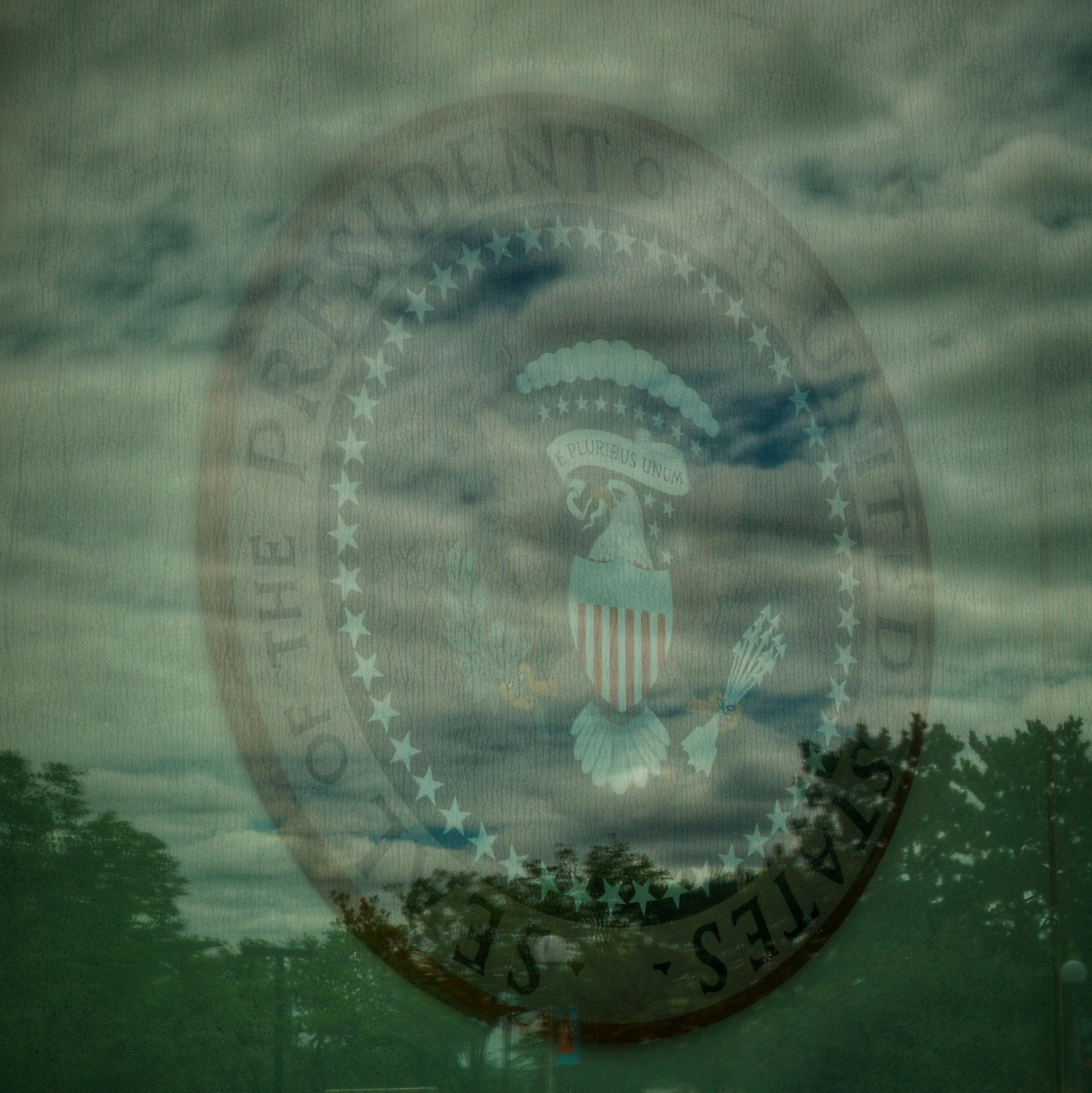
The Fraying Seam of American Truth
On the conspiracies forming around the third attempted assassination of President Trump.

The Oil Change
I was getting my oil changed when I first heard it.
A woman was talking to the mechanic about the shooting the night before, on Saturday, April 25th. The White House Correspondents’ Dinner at the Washington Hilton, where a gunman named Cole Tomas Allen had stormed a security checkpoint, fired at least one shot, and been tackled by Secret Service agents before President Trump, Melania, JD Vance, and the assembled cabinet could be harmed. One officer took a round to his bulletproof vest and walked away. Allen was in custody. A manifesto had been found.1
None of that was what the woman and the mechanic were talking about.
“It was staged,” she said, with the quiet confidence of someone sharing a recipe. The mechanic nodded, and then they moved on to something else.
I did not join in. I was not going to tell them they were wrong either. Partly because I had no standing, and partly because I wasn’t entirely sure what being wrong meant anymore in the particular epistemic climate we have managed to build for ourselves. I was there to listen and watch America metabolize the news the way it actually does, which is not in op-eds or cable chyrons, but in waiting rooms, at oil changes, and across the counters of places where people still talk to each other.
What I heard was not ignorance but a learned reflex. It was the sound of citizens who have been burned so many times by the official story that disbelief has become a form of self-defense, a proof of sophistication, and a way of saying, “I am not a fool.” Even when the thing you’re refusing to be fooled by turns out to be real.
The Reflex
I want to be careful here because there is no credible evidence that Saturday’s shooting was staged. A suspect with a documented manifesto, a cross-country train journey from California, and a brother who called the police about his radicalization minutes before the incident does not suggest choreography. It suggests tragedy of the ordinary kind, involving a disturbed man, a political atmosphere saturated in violence, and institutions only barely fast enough to stop what was coming.
And yet I don’t think we should be too quick to dismiss the impulse behind the conspiracy, not because the impulse is correct, but because it is diagnostic. When the same “STAGED” refrain that flooded social media after Butler, Pennsylvania, then floods it again eighteen months later (with barely a pause for reflection), then maybe we aren’t looking at a failure of individual reasoning. We are looking at a structural condition. Or put simply, a population does not develop a hair-trigger disbelief reflex by accident. It is trained into one, and that training has been going on for a long time.
The Playbook
Hannah Arendt, writing about the totalitarian movements of the twentieth century, observed something that has not aged a day. The goal of authoritarian propaganda is not to convince people of lies. It is to destroy the capacity to distinguish truth from lies at all and produce a citizenry so exhausted by contradiction, so practiced in cynicism, that it no longer feels obligated to try. The point is not the specific claim. The point is the habit of disbelief, which, once installed, serves power far more reliably than any single deception ever could.
This administration has not invented that playbook. But it has proven unusually fluent, and the reason is that it started with something real.
The centrist political establishment, or the bipartisan class of professionals who ran American institutions from roughly the end of the Cold War to the 2008 financial crisis, has handed its critics the gift of a long, well-documented record of deception dressed up as competence.
The Iraq War and its manufactured evidence.
The 2008 bailouts that rescued banks while families lost homes.
The trade agreements that were sold as prosperity and delivered as deindustrialization.
The gap between what official America said and what official America did became, over thirty years, a canyon.
Trumpism did not create that canyon. It simply set up a toll booth at the edge and charged admission.
This is the sleight of hand that makes the current epistemological crisis so hard to escape, because the critique of elite dishonesty is legitimate. The cure being offered a rival unreality, equally constructed, but rawer and more emotionally satisfying, is not.
We are being asked to choose between two kinds of fiction, and the one that tells us we are finally seeing clearly is the more dangerous one, because it feels like waking up.
The Archive
America has never been innocent of this dynamic. The archive of government deception is long and genuinely damning, which is exactly why it makes such good raw material for those who want to foreclose trust in institutions altogether.
After World War I, the Palmer Raids weaponized the fear of Bolshevism to jail immigrants, deport organizers, and remind anyone thinking about labor rights that the state had a long arm and a short temper. Socialists were imprisoned not for actions but for opinions. Eugene Debs received a ten-year sentence for a speech. The lesson was clear: dissent from the official story at your own risk.
Consider, closer to us, the Federal Housing Administration’s systematic redlining from the 1930s onward, a federal program officially dedicated to expanding homeownership that was, in practice, a mechanism for concentrating wealth in White suburbs and liquidating it from Black neighborhoods. The gap between the brochure and the policy was architectural and not accidental. The American government sold the idea of equal prosperity with one hand while engineering its opposite with the other, and it did so for decades before the evidence became undeniable.
The XYZ Affair, Iran-Contra, COINTELPRO, the Pentagon Papers — each of these is not just a historical scandal but a brick in the edifice of justified suspicion that the woman at the oil change is drawing on when she says staged with such quiet certainty. She is not paranoid but downstream of history. The problem is that being downstream of history does not make every flood accurate.
The Vacuum
Now consider what happens when you add to that history an administration that has made a studied practice of delegitimizing every institution capable of adjudicating between true and false. Corporate media, federal agencies, universities, and the judiciary have all been targeted not merely as opponents but as fabricators, conspirators, and a fraud.
When every institution that might verify reality is pre-emptively discredited, you do not produce a citizenry hungry for truth. You produce a citizenry that has given up on the category entirely.
Into that vacuum rushes whatever is most emotionally resonant, most tribally satisfying, most confirming of what the audience already suspects.
The “STAGED” reflex is not just a conspiracy theory. It is the logical terminus of a specific political project: the privatization of reality itself. When shared truth collapses, so does shared civic space, and when shared civic space collapses, so does the infrastructure of collective action.
You cannot organize around a problem you cannot agree exists.
You cannot demand accountability from institutions you believe are wholly captured.
You cannot vote your way out of a crisis if you believe the ballot is theater.
This is the question that should frighten us more than any single shooting, staged or otherwise: What happens to a democracy when its citizens can no longer imagine that they share a world?
The answer, historically, is not good. Atomization accelerates. People retreat into digital, geographic, and ideological communities, where reality is pre-sorted and delivered without friction. The commons shrinks, and civic participation, already battered, becomes something that happens to other people, in another country, in a civics textbook from a more innocent era. Trust in democratic infrastructure slides, and slides faster the more the underlying institutions confirm, through their own failures, the suspicions arrayed against them.
And those institutions do keep confirming. That is the cruelest part of this. The conspiracy theorists are not imagining the corruption. They are over-pattern-matching against a background of real corruption, real failures, real betrayals, and the over-correction lands them somewhere where those failures are impossible to fix, because every proposed fix is already discredited before it arrives.
The Scaffolding
The woman at the oil change is not stupid. She is exhausted. She has learned, through a lifetime of official disappointments, that the first story is rarely the whole story. She has inherited a skepticism that was once healthy and has since curdled, because the institutions that might have vindicated it and said, “here is what is true, here is how we know, and here is the accountability we are demanding,” have been so thoroughly vilified that she no longer reads them.
What we need, and what is increasingly hard to imagine producing, is not an end to skepticism but a rebuilt scaffolding for it. Institutions that are transparently accountable rather than performatively authoritative. A media that investigates rather than adjudicates identity. A political culture that treats civic engagement as something other than the hobby of people with time and advanced degrees.
Without that, we will keep meeting at the oil change, shaking our heads at the latest outrage or the latest hoax, unable to tell which is which, and the seam of shared American life will keep pulling apart, thread by thread, until one day we reach for it and find that it is gone.
The Washington Hilton has now hosted two assassination attempts in forty-five years, with Reagan in 1981 and Trump in 2026. Both suspects had manifestos, and both acted alone. Make of that symmetry what you will. History tends to rhyme not because it is poetic, but because the conditions that produce desperation are remarkably consistent, and we are remarkably consistent in failing to address them.


Identifying the problems very well here … I just wish you could also offer a way to overcome them!
You make very important points. Great read. Both sides of the ‘cleavage’ are guilty of exploiting it for short term gains. Well, the cleavage has become an abyss and people are beginning to stare at it. Tangible reality bites, though. Today I paid $88 bucks to fill my tank in California with just regular gas.
We only miss the institutions when they are not working properly, and it is unfortunate that institutions have caved and allowed themselves to be hollowed out. Now we have to sleep in this messy bed and we do not like it…