The Bulwark’s Anti-Trump Reflex
Why opposing Trump isn’t the same as understanding how he consolidates power.
Note: I will be releasing a Stew’d Over newsletter for paid subscribers later in the day. February was a bear for me, so I couldn’t record as many videos. But I look forward to getting back on camera soon!
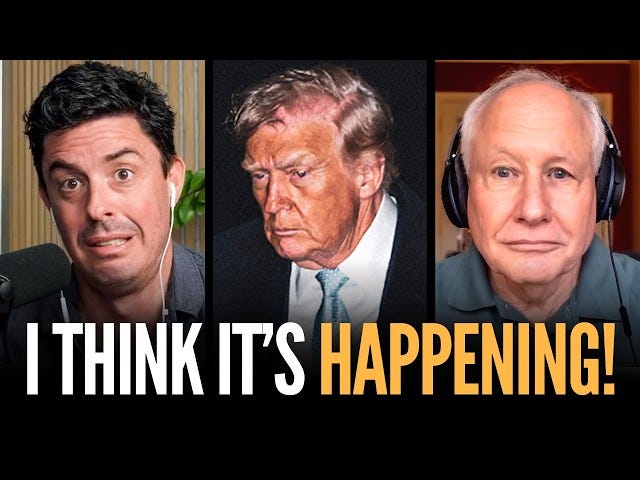
Listening to Bill Kristol and Tim Miller discuss the war in Iran, I heard something familiar. They offered a moral critique of the operation and rightly emphasized the absence of mission clarity, congressional authorization, and coherent objectives. Those criticisms are serious. They matter.
But I worry about something subtler: the assumption that incoherence guarantees failure.
In parts of the pro-democracy coalition, opposition to Trump has hardened into a reflex. When an action is immoral, it is presumed unsustainable. When a justification is sloppy, collapse is assumed to follow. But authoritarian politics does not require coherence to consolidate power. It requires spectacle, decisiveness, and a story the public already recognizes.
Strategic ambiguity does not always prevent political success, and sometimes it enables it.
Since 1979, Iran has occupied a fixed role in the American imagination as the enduring antagonist of Middle Eastern disorder. For decades, U.S. policy has revolved around containing, sanctioning, deterring, or indirectly confronting Tehran. Within that historical frame, a president who appears to strike directly at Iran can be interpreted not as erratic, but as decisive. The vessel may be flawed, but the narrative is not.
That is the uncomfortable part.
The public does not evaluate foreign policy like a policy seminar. Instead, it consumes highlight reels. A clean strike against a long-standing enemy can override questions about authorization, process, or long-term stability at least in the short run. Moral condemnation alone does not negate narrative power.
This is not praise. It is an analysis of a discomforting moment.
To assume dysfunction will inevitably expose itself is to misread how modern legitimacy is manufactured. Dominance signals often travel farther than procedural objections. And if anti-war Trump voters can frame escalation as strength rather than entanglement, opposition grounded solely in incoherence may miss the emotional terrain where support is built.
None of this diminishes the constitutional issues or the humanitarian risks. But if the pro-democracy coalition cannot articulate why something like this might resonate and if it cannot account for the appeal of force when directed at a familiar adversary, then it risks confusing moral certainty with strategic understanding.
Recognizing that something might work politically is not endorsing it. It is refusing to underestimate it.
I co-host a show called Reality Checking the Bulwark because The Bulwark matters. It has influence within the anti-authoritarian coalition. But influence demands self-interrogation. If analysis begins and ends with the assumption that Trump’s excess guarantees his failure, we will continue to be surprised by outcomes we should have anticipated.
The task is not to be anti-Trump reflexively. It is to understand how power consolidates even when it is messy, theatrical, and morally compromised.
That requires clarity and not comfort.
Tim Miller and Bill Kristol on Iran:
Reality Checking the Bulwark Episode 3


So like, when a president renders everyone’s votes null and void by taking us to war without informing Congress, yeah, I reflexively am against that. Also WARS IN THE MIDDLE EAST ARE FUCKING DUMB.