

The Antichrist Spirit and the Elite Threshold Fallacy
In response to the Trump Jesus social media post news cycle.

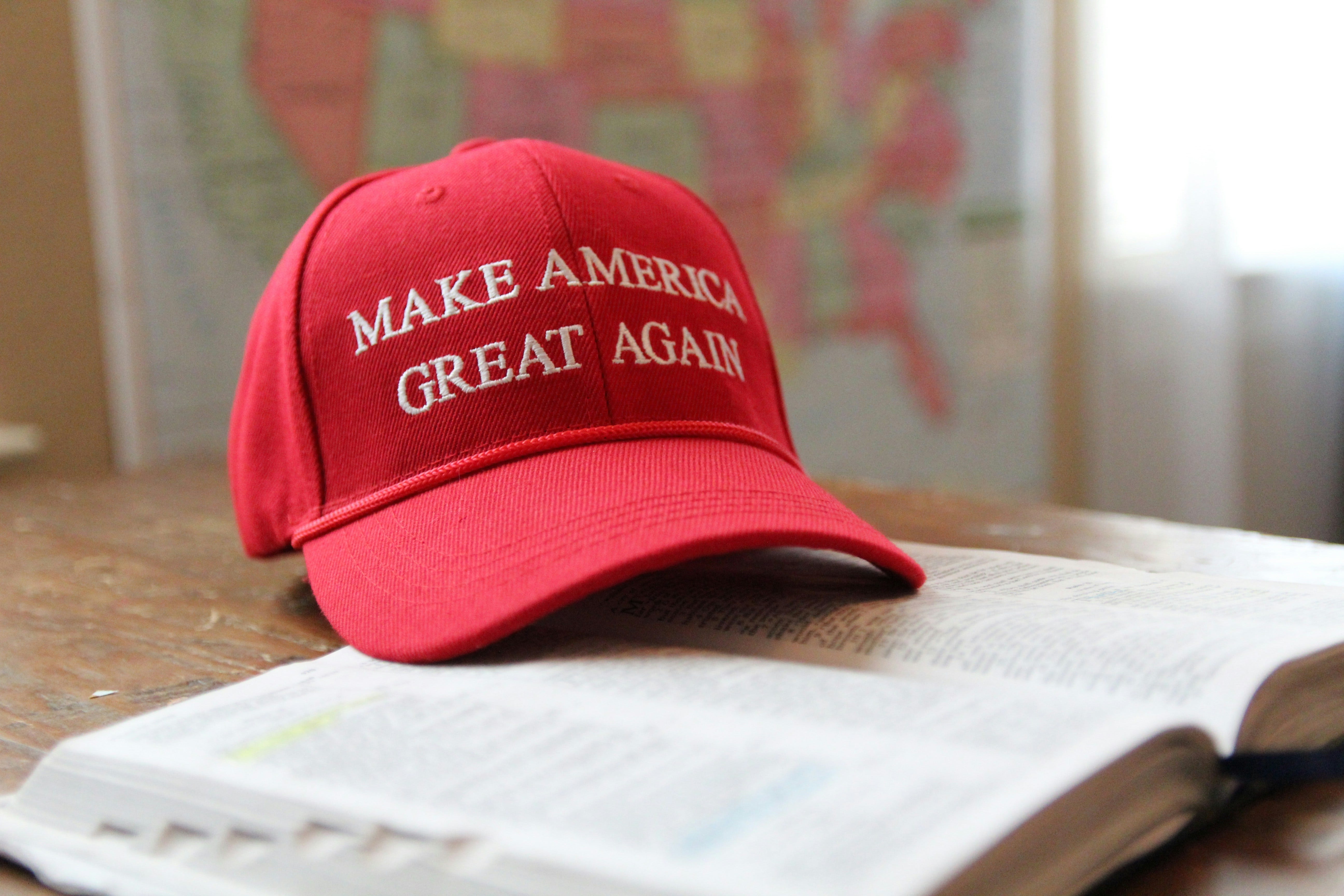
Republicans were relieved. Not angry, not ashamed, not moved to any particular reckoning, but relieved. You know, like the way you feel when a car alarm finally stops. The president of the United States had posted an AI-generated image of himself in Jesus garb on Truth Social, and when he took it down, his own party exhaled. That is the emotional register of this alleged breaking point, and it tells you more about the durability of Trumpism than any poll.
The theatrical response was predictably calibrated. Missouri Senator Josh Hawley, the Yale Law, Oxford Rhodes Scholar, and author of books about virtue and the republic reminded the audience that there is, in fact, only one Jesus. Notice the economy of that. Hawley managed to technically rebuke the president while expending so little political capital that the remark functions almost as cover rather than accountability. Former, and possibly future, Trump devotee Marjorie Taylor Greene went further and declared that an “anti-Christ spirit” was at work within the president. Notice the word spirit doing enormous theological load-bearing there, a formulation carefully designed to express maximum alarm while leaving the door of continued support technically ajar. These were not the statements of a coalition fracturing. They were the statements of a coalition managing.
Still, Franklin Graham did write a fawning letter to President Trump late last year that contained genuine theological substance alongside the ritual ingratiation required when corresponding with the commander-in-chief. Graham opened by praising Trump as a peacemaker blessed by the Beatitudes before gently noting that the president appeared to be confused about how one actually gets to heaven. Trump had been publicly uncertain on this question for months, remarking on Air Force One that he was “not maybe heaven-bound,” and at one point deploying his own spiritual insecurity in GOP fundraising emails. The Graham letter was written privately in October, held for five months, and then shared by Trump as a public relations product on Palm Sunday.
Because of course it was.
Fourteen days later, the same president posted the AI-generated image of himself healing the sick in Jesus robes. The fortnight between publicly revealing lite pastoral counsel about the limits of human divinity and posting yourself as Christ is, in its way, a complete literature.
This also arrives on the heels of a performative feud with Pope Leo XIV, in which Trump is attempting something specific and worth naming clearly: an attempt to reframe the Vatican’s opposition to the Iran war (a position rooted in centuries of Catholic just war theology) as a personal political betrayal and loyalty test that Trump-aligned Catholics must now grade themselves against. It is an audacious move, essentially asking American Catholics to choose between their church and their president by characterizing the pope’s conscience as a political problem. That Archbishop Paul Coakley and Bishop Robert Barron called Trump’s remarks inappropriate is notable. That Senator Bernie Moreno, himself Catholic, responded by calling the pope’s conduct “a disgrace” is more notable still. The coalition is not monolithic, but it is more durable than the headlines suggest.
The most penetrating observation in this news cycle came not from a pundit but from Cornell University sociologist Landon Schnabel:
When people hold two conflicting commitments, deep religious conviction and deep political loyalty, something has to give. Some will adjust their politics to match their faith; Marjorie Taylor Greene’s reversal suggests that is already happening. But others will quietly adjust their theology to match their politics, finding reasons why the image wasn’t so bad, why the pope is the one who’s wrong, why this war really is divine will. Both responses are predictable. The question for the coalition is which one wins out.
What Schnabel is describing is the quiet theological adjustment and backfilling of doctrine to accommodate political loyalty that undergirds why the mainstream press and punditry keep misreading these moments. Evangelical theology is not a fixed architecture that either holds or collapses when pressure is applied. It is, in practice, far more plastic than its adherents or its outside observers tend to acknowledge. Doctrine bends as interpretation migrates, especially in Catholicism. The same tradition that gave us the Book of Amos thundering against corrupt kings gave us court evangelicals signing off on family separation at the border. The theological flexibility is not hypocrisy, but something more structurally interesting: a meaning-making system under genuine stress, thus making the adjustments those meaning-making systems make when survival is at stake all the more interesting.
Which brings me to Elite Threshold Fallacy or the persistent belief among professional-class media and institutional culture that there exists some Trumpian transgression so brazen, so self-evidently disqualifying, that it will finally snap the spell and send his supporters streaming back to normalcy. The fallacy has two components. The first is the assumption that Trump’s coalition is held together primarily by misunderstanding and that if people could only see clearly, they would recoil. The second, subtler component is the structural incentive that media ecosystems have to frame each new outrage as potentially decisive, because “the walls are closing in” generates engagement in a way that “this will probably blow over” does not. Click-bait and wishful thinking, wearing the same clothes.
I confess this failure as my own, not just as a critique of others. In the first Trump era I caught myself reading polls, watching evangelical leaders squirm, noting the quiet defections, and thinking: this time the arithmetic is different. It wasn’t. The coalition absorbed it, rationalized it, and in some cases emerged more committed than before. The assumption that elite thresholds or the point at which educated, institutionally-embedded people find something intolerable then maps onto the thresholds of a thoroughly nativist, anti-establishment movement was a category error, and an expensive one. Nine years in, that error is still being made. The Jesus photo generated the same “walls closing in” subtext in about forty-eight hours and right on schedule it was.
My honest assessment is that this will blow over.
People who have already demonstrated a willingness to adjust their theology to accommodate their politics will continue to do so, despite the performative outrage that makes for compelling short-form content. The quiet quitting of Trump by some evangelicals is real, and the marginal erosion in his numbers among Latino Protestants and mainline Protestants is worth watching because margins matter in a performative democracy experiencing the circulation of elites.
But the core holds because it has held through worse, and it is held together by something more durable than any single news cycle can disrupt: a network of identity, grievance, meaning, and institutional belonging that was forged across decades and is not going to be dissolved by a Truth Social post, however surreal.
That may be a dark conclusion, and it offers none of the theatrical uplift that political commentary is often expected to provide. But I respect my audience too much to offer them baseless hopium for branding’s sake. The more useful question is never will this destroy him (spoiler: it won’t). But rather what structural conditions would have to change for the coalition to genuinely soften. That question requires slow, grinding analysis of economics, demographics, and institutional decay rather than a chyron. Which is perhaps why it so rarely gets asked.


There is absolutely nothing that Trump could do, including having sex with a young boy, that would shake his core of believers, for he is their savior. He is the enemy of their bete noir, the libs, the minorities, women who don't know their place in the patriarchy. That is all that they really care about, not even the economy, the will eat dirt, if they have to, LBJ said " “If you can convince the lowest white man he's better than the best colored man, he won't notice you're picking his pocket. Hell, give him somebody to look down on, and he'll empty his pockets for you.”
Only it is not just the colored man, it is the libs, the "feminazis", the queers, the immigrants, those that they fear are displacing them, led of course by Jews like George Soros.
The culture war is a real war, it is asymmetrical and sporadic violence, seen in mass shootings, seen in cop brutalization and murder of blacks, in the acts of ICE, not just the acts of a Dylann Roof, or bombing of a synaqogue. This is the rotten underbelly of Americam a cancerous virus, that has infected the body politic and erupted as a pox in the form of MAGA and Trumpism.
I suspect that our mistake is thinking there could be a "return to normal" when our definition of normal is not a state that they have ever been in during their lifetimes.