
Author’s Note: Readers may notice I’m posting a little bit later in the day now. That is due to scheduling adjustments on my end. I hope you still find value in this content and can find time to take it all in when it’s best for you. Much love and thanks for all of the support!
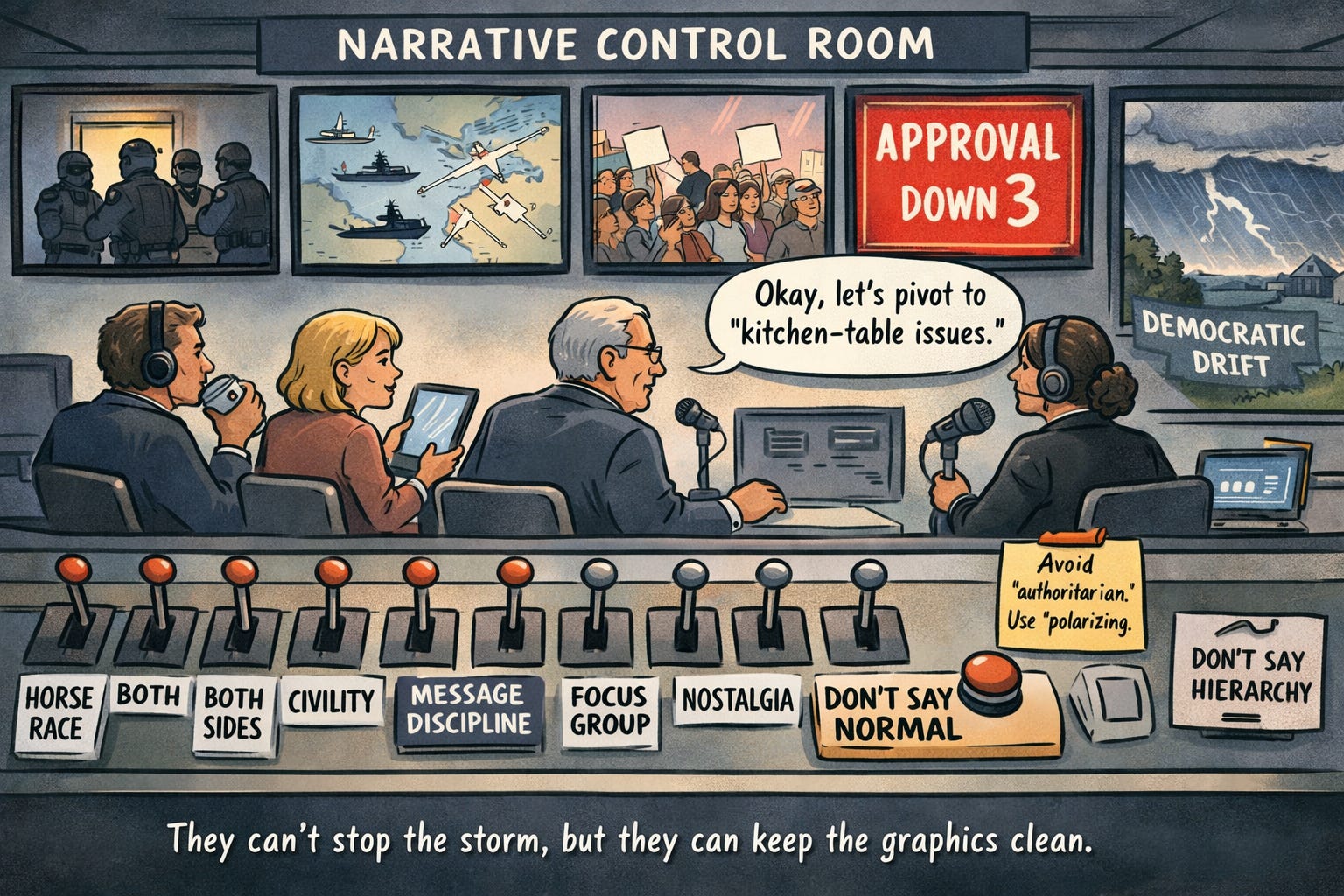
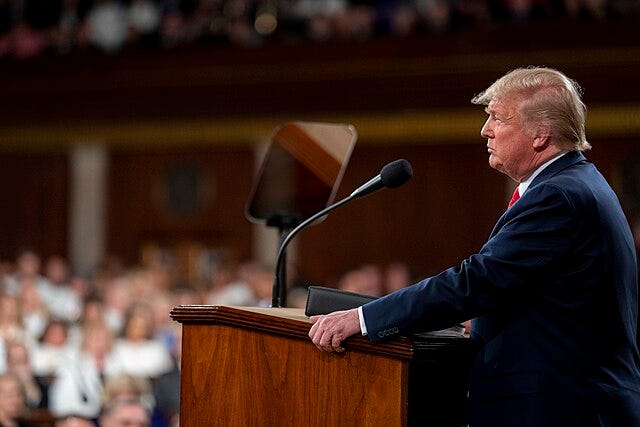
As we approach the first State of the Union of the Trump presidential sequel, I noticed an Atlantic piece by Jonathan Lemire portraying Trump’s second term as rocky. Lemire points to growing disapproval on the economy, ICE tactics that have killed two White Americans and therefore attracted national attention, and the sabre-rattling that now defines the administration’s foreign policy. In that telling, Trump’s presidency is on the rocks hemmed in by backlash, scrutiny, and falling numbers.
That may be true for some Americans. But my fear is that it is not the whole picture.
A large and influential portion of the country has been primed for years to believe immigration is “open borders” and that “wokeness” has made White Americans overly self-conscious about class, hierarchy, and history. For those voters, the point is not whether Trump’s actions are elegant or humane. The point is that power is acting loudly, visibly, and often brutally. That is the darker reality of Trumpism: it has learned to market domination as “order,” and cruelty as “strength.”
This is where scoreboard democracy fails yet again
A politics narrated primarily through polling, approval ticks, crosstabs, and stale turnout models treats public opinion as a final verdict rather than a partial instrument. Polls can measure preference under socially acceptable conditions. They are far less equipped to measure the appeal of threat, spectacle, and punitive governance especially when the underlying motives are things people hesitate to name out loud, or have been trained to rationalize as “common sense.”
I’ve written before about scoreboard democracy or the class of professional political prognosticators who treat American politics like a game of numbers rather than a contest over lived reality. One party keeps chasing a shrinking band of “reasonable” swing voters; the other mobilizes by activating older reflexes like fear of the other, nostalgia for hierarchy, and the promise that someone will finally “make American great again.” In that environment, it’s possible to disapprove of Trump on paper while still drifting toward him when a campaign turns the enemy into a nightly episode.
The problem is that this kind of historical realism is not the preferred posture of mainstream political storytelling. Publications built around a residual American exceptionalism as well as an assumption that the system is basically healthy and merely needs better management will default to scoreboard narratives because they feel safer. They reassure “middle America” and anxious centrists that the country is still normal, that the institutions are still steering, that the electorate is still mostly persuadable.
But Trumpism is not simply a persuasion project. It is an identity project sharpened in the years after Obama, when the symbolic fact of a credible Black president destabilized long-held assumptions about who is entitled to rule. In that context, polls alone won’t capture the gravitational force of backlash politics: the way voters can express discomfort with Trump’s methods while still finding his posture emotionally satisfying when the “other” is made into the story.
So whatever commentary floods in after tonight’s State of the Union, that’s what I’ll be watching for: not just the numbers, not just the spin, but whether the analysis can admit what the spectacle is doing and who it is for.

In the free section, I wrote about scoreboard democracy and how politics gets reduced to polls, turnout models, and breathless momentum talk, as if the only thing that matters is who’s up by two in Wisconsin and whether the vibes are “shifting.” But what I’m trying to name is bigger than polling error. It’s a kind of cultural denial or an analytic system designed in an old American paradigm, one that can measure disapproval while refusing to interrogate the darkness undergirding American power politics especially when that darkness is popular.
That’s why I’ve been feeling exhausted by the times we encompass.