

Reality Checking The Bulwark
Conservative failures already destroyed the Republican Party. We must not allow them to destroy our own.


We’re institutionalists. We believe institutions matter – and when institutions fail, democracy falters.
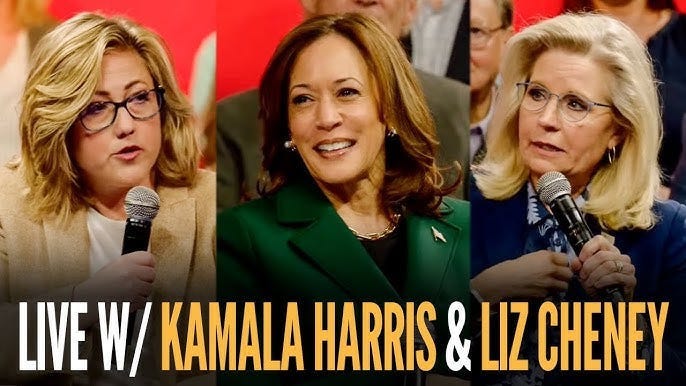
Our collective undoing doesn’t rest entirely on the crumbling shoulders of institutional rot. Individuals and systems have struggled mightily to meet the moment, and they matter too. But when the historical chapter is written on this era of decline, emphasis will rightly be placed on the shortcomings of politics, industry, academia, and the media.
Donald J. Trump’s command of American public life hasn’t just challenged and changed preexisting institutions. Now more than a decade in, we’ve seen an entire cottage industry of post-Trump entities blossom and bloom. Some exist merely to profit off our collective anxiety and outrage. Others fight Trump from a strictly reactive stance. Still others aspire to proactively inform and mobilize the broad pro-democracy movement.
But what if those institutions fail? How are we to preserve a just and free future if the efforts specifically tailored to counter our authoritarian president replicate their predecessors’ fatal flaws?
In fairness to The Bulwark, the outlet wasn’t built to lead a movement. A group of Never Trump Republicans set up shop to connect with and broadcast to other Never Trump Republicans. But a funny thing happened on the way to the 2020 and 2024 elections. The Bulwark took off. Their audience expanded from politically homeless conservatives to include liberals and even progressives. In a national media market traumatized by Trump, opposing MAGA with humor, insight, and quality craftsmanship became big business.
Today, The Bulwark has nearly a million subscribers on Substack. They broadcast across a multitude of platforms, employ a growing roster of pundits and analysts, and have become a powerful voice in their adoptive Democratic Party. Whether you listen to The Bulwark or not, they matter. Whether you agree with them or not, they matter. They’re not leading the pro-democracy movement, but they’ve become a crucial pillar in its very big tent. That is why we can no longer stand by quietly and watch The Bulwark continue to fail.
The network is big and diverse. Much of the commentary espoused by The Bulwark is either empirically sound or falls within the realm of reasonable debate. They get a lot right! But a central strand of their punditry stems from deep-seated conservative philosophy, an ideological worldview proven inimical to democratic progress and incompatible with popular electoral victory. The trickle-down consensus erodes more than the middle class, a reflexively pro-Israel framework ruins more than Gaza’s future, and tough-on-immigration messaging risks more than our civil liberties: they’re proven political losers.
Furthermore, policing the language of the most energized segments of the Democratic coalition has become a mainstay of the Bulwark brand, nitpicking genocide, abolition, socialism, and DEI in place of serious engagement with the lived reality expressed in those terms. Consider Sarah Longwell’s focus groups (and Focus Group Podcast), which demonstrate how right-wing framing is reinforced and mainstreamed without ever inspecting, scrutinizing, or dismissing the bad data, learned bigotries, or plutocratic narratives that undergird a given premise. Pumping out content based on such propagandized beliefs – without dismantling or contextualizing them – only compounds the damage. Do the Bulwark’s ideological instincts guide the conversation toward an attempt to preserve conservative ideals, or toward building a coalition that reckons with the obvious failures of the past?

Conservatism failed. It failed not only when measured against its own stated goals, but as a political brand divorced from the realities of actual conservative governance. Conservatism succeeded only until Trump exposed it for the con that it always was, and a Bulwark-approved conservative Kamala Harris campaign was destined to flop in 2024.
If the operatives who lost the narrative, the party, and the cushy administration jobs to MAGA never reflect on their previous mistakes and continue advocating as though the last decade never happened, our wisest move is to simply ignore them. But we believe people can change. Joe Wrote says, “The last people you should trust when it comes to beating Trump are the ones who lost to Trump over and over again.” And he’s right – to a point. As individuals who have grown, evolved, and learned from our own mistakes, we see The Bulwark not as an irredeemable, fixed monolith. We know they can adapt and more fully reconcile the political past, present, and future of the United States.
Let’s be blunt: you cannot credibly analyze and advise on our current political environment without a deep appreciation for the centrality of race in American history and culture. In theory, it is possible for The Bulwark to inform its commentary without a single Black employee, but that lack of perspective would be easier to ignore if the racial politics of any given situation weren’t so routinely missed. While DEI has become a bogeyman watchword, the inherent value of diverse employee experience remains unchallenged – especially in media environments.
Internalizing analysis steeped in Black American history is a good start. But that will only address one of the Bulwark’s shortcomings. Ideological left-wing Americans are real, they’re serious, and they’re an accelerating force within the pro-democracy movement. Yet with rare exception, the Bulwark only engages with caricatures of the left – if at all. The Bulwark has liberal thinkers, but no progressives. Their collective punditry ignores an element of their subscriber base and, more importantly, their counterparts in the broader pro-democracy coalition. Straw-manning the left only impoverishes their analysis. They need real lefties in-house if they’re going to grow past false equivalencies and become a serious center of power in the pro-democracy movement.
The Bulwark isn’t going anywhere. As the fight over the future of the Democratic Party reaches a fever pitch this year and in 2028, the influence of The Bulwark is only going to grow. Let’s help them better serve our democracy – before we lose it all for good.


 | A guest post by
|
The members of the bulwark are neoconservatives. Before this era I thought they wanted a Hitler. I hate much of what the neoconservative movement has done. I usually disagree vehemently with the bulwark's foreign policy, and in my opinion they all have far too rosy a view of this country's role in the world. But I've been proven wrong about their commitment to liberalism. This is by far the most important issue facing us right now, and these people, whatever their shortcomings, are loudly and persistently advocating for human rights, the rule of law, and politics without violence or corruption. They are allies. Let's not reject their efforts, even as we invite them to broaden their range.
I wouldn’t go so far as to say “conservatism failed” — and I’m a leftie! — because it becomes a semantic debate over “what is conservatism?” (I’m also a pragmatist and anxiety-ridden, and I recognize that humans as a species will protect their perceived tribes.)
That said, send this to JVL. It is time for the Bulwark to expand their voice. Pragmatically, of course.