

On Cotton...
...and the American operating system.

Author’s Note:
Starting with this post, I'll be writing here as Deuce Davis.
Steward Beckham Jr. has accumulated too many hats across civic, professional, and personal life, and a pen name, even one as transparent as this one (the days when Hamilton could really be Publius are long behind us), still buys a margin of separation worth having.
The work itself is unchanged.
Still politics, and still history, in this moment when truth has become an inconvenience in both public and private life, and when the bill for that habit, in lost trust, in fractured institutions, in the steady shrinking of what we can honestly say to each other, is coming due.
The publication itself stays Stew on This, an ode to the name I was given.
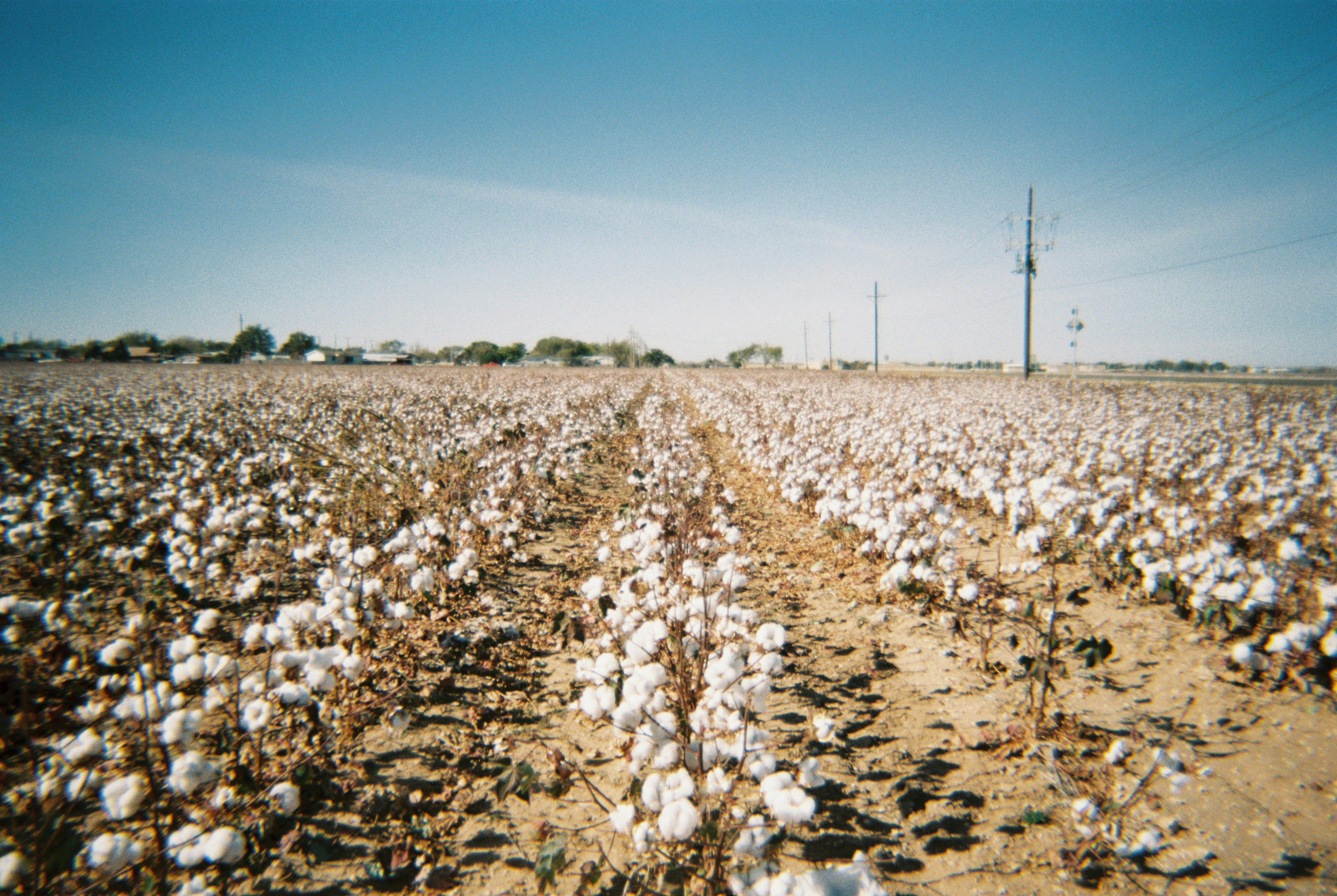
I’ve been thinking a lot about cotton and about how the commodity that made America rich is also the commodity that explains why America still can’t figure out whether it owes anything to the people who picked it, or to their descendants, or to anyone at all. Cotton is the early structure behind the American economic miracle, and it is explanatory of the American political pathology.
Tobacco came first. The Chesapeake colonies of Virginia and Maryland grew rich on it, and Europe acquired a taste for it, as it had already acquired a taste for sugar and would soon acquire a taste for tea. Rice and indigo built the Lowcountry of South Carolina as sugar built Louisiana. The antebellum South was a portfolio of extractive monocultures long before cotton was the only stock anyone wanted. What turned cotton from one item on the slate into the slate itself was two things: Eli Whitney’s gin, patented in 1793, and the violent clearing of the Mississippi Black Belt that followed Andrew Jackson’s removal policies four decades later. The Louisiana Purchase gets the diplomatic credit, but France didn’t have anyone living on that land to consult, and the United States still had to evict the people who did. The cotton kingdom wasn’t bought from Napoleon. It was taken from the Choctaw and Cherokee, to the Creek and Chickasaw, and then planted by people who had been bought from Virginia.
The cotton gin is worth dwelling on because it sets a pattern. Whitney’s machine handled seed separation, the original bottleneck. But with that bottleneck cleared, picking became the new bottleneck, and picking required hands. So the technology that, by any reasonable logic, should have made enslaved labor less necessary instead made it more profitable. Demand for cotton exploded, and with that, demand for the people forced to grow it. The internal slave trade, which moved roughly a million people from the worn-out tobacco fields of the Upper South to the new cotton frontier of the Deep South over the first half of the nineteenth century, is the largest forced migration in American history, and the cotton gin is its proximate cause. It is, in other words, one of the founding facts of American technological progress. Mechanization here did not liberate labor but intensified it in a brutal fashion.
We have been doing this ever since.
What cotton did, in the aggregate, was make America rich very fast. Within seventy years of declaring independence, a former agricultural colony on the edge of the Atlantic had become a serious industrial power with a banking system, a railroad network, and a credible claim to hemispheric dominance. The cotton bales that left New Orleans and Mobile for Liverpool financed much of the credit, the textile mills in the North, the canals, and the western expansion. American capitalism was midwifed by cotton, which is to say it was midwifed by slavery, which is to say the standard story about how the United States became modern is missing its central character.
Here is the analogy that has been clattering around in my head. Cotton was to America what major-conference football is to a research university. It produces visible, intoxicating, ostentatious wealth that includes new buildings, new prestige, and a new donor class. However, it produces that wealth at the expense of everything the institution is officially supposed to be doing. It creates constituencies of boosters, athletic directors, and television contracts whose interests permanently bend the host institution out of shape. It becomes the thing the institution is for, even when the institution’s charter says it is for something else entirely. American higher education is now in a position where football money funds the chemistry department, and the chemistry department, in some structural sense, exists to provide football with a host body.
Cotton did this to America.
It enriched a country at the expense of its social cohesion, its moral standing, and any serious chance of building a welfare floor underneath its citizens. In essence, the buildings got built while the mission rotted.
The mission rotted because the political coalition cotton produced was a herrenvolk coalition, Pierre van den Berghe’s term, and the indispensable concept for thinking about American politics. A herrenvolk democracy extends political membership and civic standing across class lines within a designated racial in-group while categorically excluding everyone outside it. The genius of the arrangement, from the perspective of the people on top, is that it makes solidarity within the excluded group cheap and solidarity across the line nearly impossible. Poor whites in the antebellum South — and, with modifications, after it — got something from the bargain that wasn’t quite money but wasn’t nothing. W.E.B. Du Bois, in Black Reconstruction (1935), called it the “psychological wage” of whiteness:
public deference,
small legal privileges,
access to spaces and rituals from which Black Americans were barred, and
the sense of standing somewhere on the ladder rather than under it.
The wages of whiteness were paid by the bosses and billed to everyone. They have been paid, in updated forms, ever since.
This is why the United States has the welfare state it has, which is to say the welfare state it doesn’t. Every serious attempt at building one has run into the herrenvolk veto. The New Deal carved out agricultural and domestic workers, which is to say it carved out most Black labor, because Southern Democrats made that the price of their votes. The Great Society triggered the white backlash that has structured presidential politics for sixty years. Universal programs are popular in this country until they are perceived as benefiting people on the wrong side of the racial line, at which point they become contested, defunded, and then a distant memory. The arrangement is not a glitch in American democracy, but the operating system on which it runs. It is a marvelous social invention, if your standard for marvelous is that it lets the people on top keep what they have while the people below fight each other for what is left.

Cotton today is everywhere.
It is grown in Texas, Xinjiang, Uzbekistan, India, and Mali. It is sold by the bale and bought by the t-shirt. The commodity that built the empire is now so generic you can buy a five-pack of it at Target without seeing the lineage, which is kind of the point. Commodities are like that. They start as strange and expensive luxuries that are freighted with meaning, and then over time they recede into the background of everyday life until you stop noticing them entirely. That recession is what makes them powerful. The cotton in your shirt is doing exactly the same quiet economic work it was doing in 1850. You’re just not thinking about it.
The political logic cotton built has done the same thing. The herrenvolk bargain used to announce itself. The antebellum South had a theory of itself, and the theory was written down in pamphlets, speeches, and constitutions, as people argued about it openly because they had to. Now the bargain need not be announced, as it is woven into the assumptions that govern which programs survive contact with public opinion and which do not. It is embedded in the latent intuition that “us” means something narrower than the citizenry. It is baked into the way the political commentariat can describe American politics in language that strips out every racial dimension and pretends that what is left is the whole picture.
Cotton is no longer special.
Neither is the pathology it left behind.
That is the inheritance.

I was listening to Karen Hunter on Monday, and she brought me joy by talking about the musical genius Stevie Wonder. He was in his mid-20s when he released Songs in the Key of Life. A blind Black man who grew up in mid-century Detroit, writing about love.
Simply amazing.

Malania EPSTEIN
https://youtu.be/7P6cIrIBTKc?si=2y0USVyM6hShzaSf