
Author’s Note: This newsletter is being released much later than people have become accustomed to. I will work to have another one ready in the AM or early PM. Thank you for your continued support as life throws curveballs.
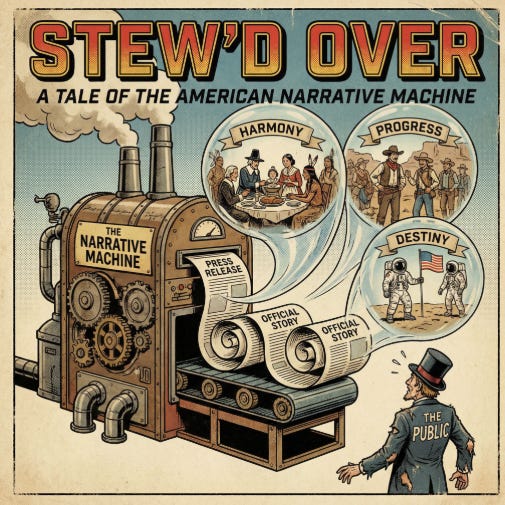
Machine
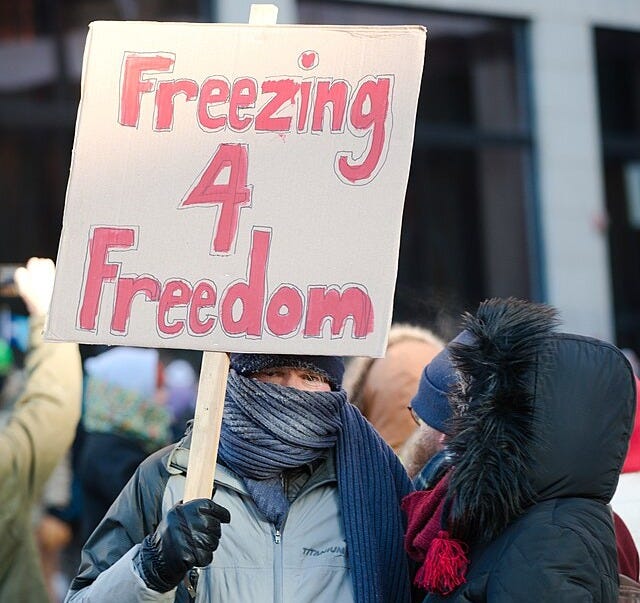
The bravery on display in Minneapolis and across Minnesota has been a sight to behold.
Not in the abstract “civic virtue” way we talk about in textbooks, but in the practical, sweaty, and dangerous way that includes people showing up, filming, organizing, and refusing to look away. If you oppose the current administration’s immigration enforcement posture, it offers something rarer than optimism.
It offers evidence. Evidence that the public will still insist that you don’t get to do violence in our name and then call it procedure.
And yet, I can’t shake the question that always arrives right when the crowd starts exhaling. What kind of victory is this? And what does it buy the people who don’t support the policy?
Because power can lose a news cycle and still win the decade.
A real crack in the wall: the courts
There is a meaningful reason for hope, and it’s not a vibe. It’s the law, specifically, judges acting like the law applies to the people with badges and budgets.
A federal judge in Minnesota has ordered Acting ICE Director Todd Lyons to appear in court in person and warned that contempt is on the table for alleged failures to comply with court orders, especially regarding due process and bond-hearing timelines.
That’s not a routine scolding. That’s a branch of government trying to reassert a basic premise: the state cannot “surge” its way out of constitutional constraints.
There have also been court efforts to limit the use of force against demonstrators and observers. Againm it’s modest, procedural, and unglamorous, which is exactly why it matters. The most durable resistance to state overreach often looks like paperwork, hearings, deadlines, and judges refusing to be ignored.
That doesn’t mean courts save opponents of the current regime. Courts are slow, appellate courts can narrow remedies, and agencies can comply on paper while undermining in practice.
But it does mean something crucial to consider. Which is that constraints are possible. And if they’re possible, they can be defended.
The face changes, but the machine keeps its funding
A lot of the optimistic coverage right now is gathering around personnel shifts, most notably Gregory Bovino no longer serving as the loudest federal avatar on the ground in Minneapolis and other American cities. There are also reports of partial drawdowns.
If you’ve been living through this administration and its prequel, you know how tempting it is to treat that as a turning point. A de-escalation and a retreat can feel like proof that public pressure works.
And to be fair, sometimes it does.
But here’s the thing power loves most: a story of resolution that costs it nothing structural.
A face change can be meaningful politically even when it’s meaningless institutionally. It lowers the temperature, giving wavering allies a narrative exit ramp. It invites the country to move on, especially if the next headline is shinier.
This is where my wariness kicks in. Because Bovino’s departure can be read as discipline or, in a darker sense, as brand management.
A bomb-thrower is useful in the opening act. He draws attention, provokes conflict, generates footage, and sets the tone. But then predictable blowback arrives, with public anger, legal scrutiny, and political risk among coerced allies, and thus the bomb-thrower becomes a liability.
So you swap the punctuation and replace the exclamation point with a semicolon.
The more dangerous version of power is not always the loud one. It’s the quiet, competent one or the silent operator who doesn’t posture for cameras, doesn’t hand critics an easy villain, and still keeps the gears moving with detentions processed, transfers executed, hearings delayed, and communities exhausted.
That’s how a system matures.
Not by becoming kinder, but by becoming less legible.
Bovino as template, not exception
Here’s a speculative point I think is worth flirting with.
Even if Bovino is no longer in the spotlight, he may already have served a function beyond his role: setting a cultural template. Similar to George Washington and the presidency.
He modeled a certain posture with aggression as branding, enforcement as performance, and public antagonism as a recruitment poster. Once that mold exists, it doesn’t require the same personality to keep reproducing it. A system can absorb the aesthetic and distribute it through new people who are smoother, quieter, and harder to pin down.
That’s why personnel change is not the same thing as policy change, and why policy change is not always the same thing as structural change.
ICE still has funding and institutional muscle. The executive branch still has the capacity to turn procedural complexity into a fog machine.
The machine doesn’t need to win the argument.
It just needs to outlast your attention span.
Narrative control: the other enforcement arm
There’s another front here that deserves more attention: the fight over what counts as “neutral.” Recent media moves, such as high-profile hires and newsroom “repositioning” projects, are being sold as attempts to restore trust by countering “perceived bias.” CBS comes to mind.
That language should set off your brain.
Because “neutrality” is not a location. It’s a strategy that can mean honest fairness but also signal enforced symmetry: treating claims and counterclaims as equally plausible even when one side has the state’s power with funding, detention facilities, armed personnel, and attorneys. But the other side has phone video and a stressed public defender.
When institutions perform balance like a ritual, they can end up laundering power. You get a tidy debate format, a nice, calm anchor tone, and a public trained to think: “Well, both sides have a point.”
Meanwhile, the administrative machine keeps humming.
And it’s often the most important stories with court compliance, bond timelines, transfer practices, and quiet rule shifts that get pushed into citizen-journalist spaces, local reporting, and legal filings. Not because they’re untrue, but because they’re not cinematic.
Power loves boring, and boring is how it survives.
The uncomfortable possibility: support is deeper than the corridor admits
Now for the part that makes polite circles clear their throats.
It’s possible that more Americans support the administration’s racialized enforcement posture than polling, elite commentary, and the cosmopolitan professional corridor are willing to contend with.
Not necessarily as open enthusiasm. Often it looks like tolerance:
“I don’t like the mess, but I like the message.”
“I don’t want innocent people hurt, but I want them scared.”
“I’ll vote on prices, not rights.”
“That’s terrible… anyway.”
A lot of political support is not passionate agreement. It’s more like permission to proceed and permission to do it “over there,” or to people the supporter doesn’t identify with, in places the supporter will never visit.
And permission is hard to measure, because it’s not always something people confess out loud, especially when it’s socially costly. That’s not a conspiracy theory; it’s basic human behavior. Social desirability bias is real. So is selective attention. So is the very American habit of calling cruelty “toughness” when it’s happening to someone else.
If that permission structure exists (and I think it does), then the administration doesn’t need universal approval. It needs a public that will tire, normalize, and move on.
Hope, with conditions
I’m not writing this to dim the courage Minneapolis has shown. I’m writing it because courage deserves an honest map of the terrain.
The court’s willingness to compel senior ICE leadership and insist on due process is a real crack worth defending. The civic response is a real force worth sustaining.
But the bigger risk remains: a federal enforcement apparatus with funding, institutional heft, and narrative agility can swap faces, soften language, and keep doing the work, especially if the public is exhausted and the media is chasing the next shiny object.
So here’s the question I’m holding onto:
Will relief become leverage or a lullaby?

That Haunting Realization That More People Want This Than We Want to Believe
The corridor problem: polling isn’t the whole country
I want to zero in on something I hinted at above, which is that elite spaces can become myopic. Not because the people in them are uniquely foolish, but because the social world around them narrows what feels “plausible.”
Polling matters, sure, but it can miss the more important question: not who supports this loudly, but who will permit it quietly.
And that permission structure is where a lot of political behavior comes from, especially the kind people struggle to explain. It’s where the political courage (or calculation) comes from when Democrats vote to fund enforcement agencies they privately criticize. It’s where the hesitance comes from when party leaders refuse to challenge right-wing framings built on stereotypes and demographic panic.
In other words, it’s not always that people love what’s happening. It’s that enough people will tolerate it, prioritize other issues over it, or accept it as “necessary.”
That’s the difference between opposition that trends and opposition that governs.
Listening outside the bubble
This is why the conversations between Ellie Leonard and Walter Rhein (as well as THE LEFT HOOK with Wajahat Ali , Danielle Moodie, Don Lemon, and Joy-Ann Reid) have been so valuable to me.
They don’t treat “polarization” like weather. They talk about how insulated communities are built and maintained through social relations, economic organization, and media systems that reward belonging over truth.
They also return, again and again, to an idea that feels impolite but is clarifying: people don’t just end up in echo chambers. They often live in structures that reinforce them through who they work with, who they worship with, what they watch, what they’re punished for saying out loud, and what they’re rewarded for repeating.
Whenever these folks have a live discussion, I really suggest folks take a listen.
A historical truth: division wasn’t an accident
Here’s the dark truth I keep coming back to.
America didn’t become divided by race and ethnicity by accident. Over long stretches of history, division has been useful, especially to those who benefit from cheap labor, weakened solidarity, and a population trained to punch sideways instead of upward.
You can see early versions of this logic in colonial Virginia, when crises of labor and social order hardened lines between groups and racial hierarchy became a tool of stability and control, not just an attitude.
That pattern repeats: when cross-class cooperation becomes possible, power finds ways to fracture it in social, legal, and cultural ways.
Not because “everyone is evil,” but because the incentives are consistent.
America as story infrastructure
In that context, we have to face another uncomfortable truth: “America” is also a marketing miracle.
Not marketing as in a slogan. Marketing, as in story infrastructure a repeated narrative that becomes a person’s sense of destiny and worth.
Across generations, many Americans have been told (explicitly or implicitly) that status and belonging are tied to skin color. When a story is told enough times, it stops feeling like a story and becomes the natural order of things.
That’s how a nation becomes gripped by existential panic over demographic change. Like it’s something that should be morally meaningless but becomes politically explosive when attached to identity and power.
This is where good marketing meets the irrational behaviors of humanity, our fear of loss, our appetite for status, our addiction to “us versus them,” and creates the ability to spin narratives and sell an otherwise unexceptional or even disastrous product.