
Iran and Its Talking Points
Who Insures the Strait?

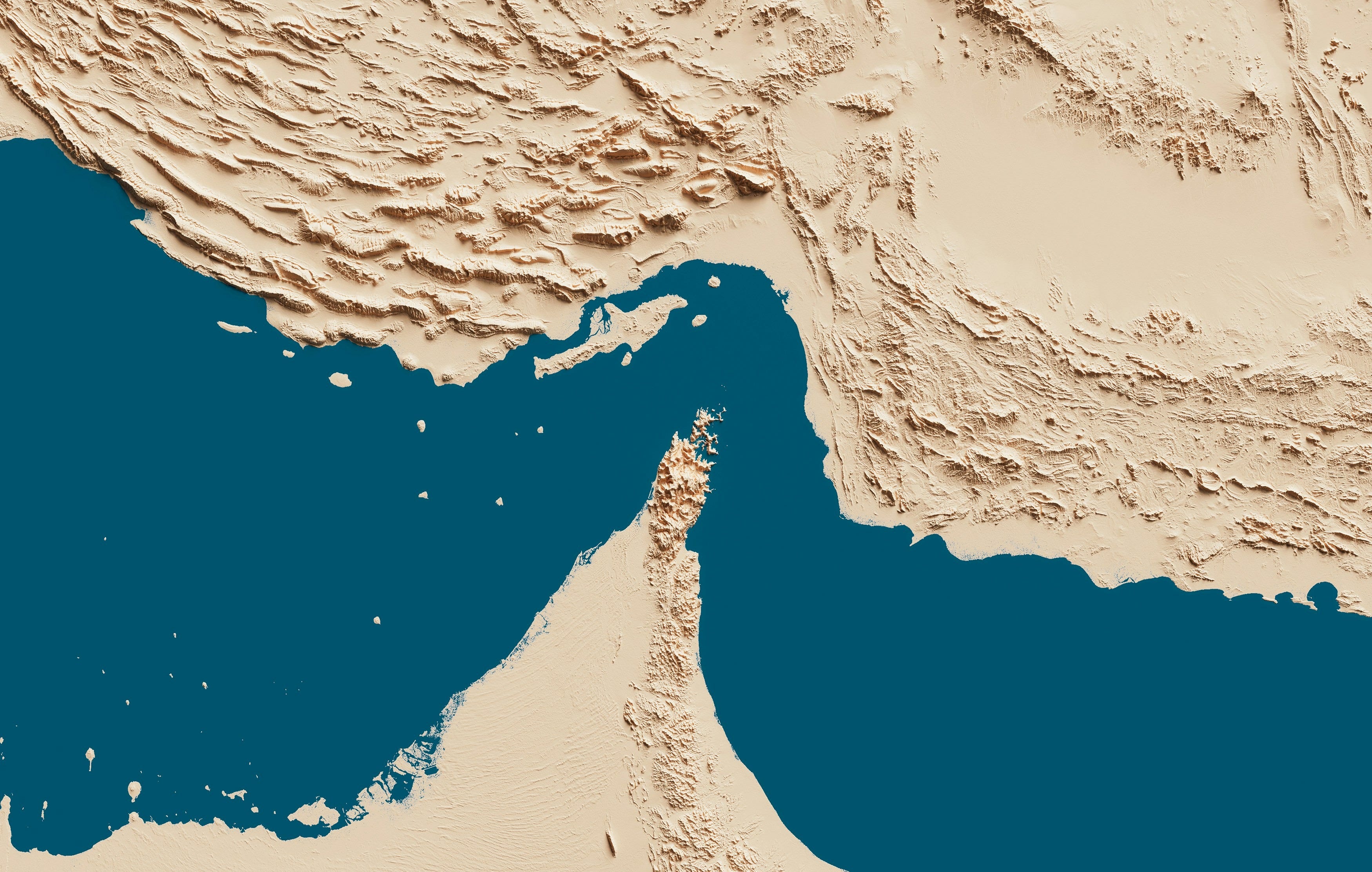
There are two narratives that I have come across. Trump-adjacent spokespeople are dispelling the popular notion among anti-Trump groups that Iran has humiliated President Trump because it shows its control over the Strait of Hormuz. Actually, the entity that controls the Strait of Hormuz is the insurance underwriting industry in London. When the U.S. and Israel struck Iran in late February, the consequence that actually paralyzed the waterway was not a blockade but a financial one: all twelve members of the International Group of P&I Clubs, which is the risk pool that covers roughly 90% of the world’s oceangoing tonnage, cancelled certain war-risk coverage on 72-hour notice, and traffic through the Strait fell by about 95% from its prewar average of 178 ships a day. That is a sign that the situation is more complex than a buzz phrase circulating on the Never Trump circuit.
Still, there is a sleight of hand in that assessment. The reason insurance premiums have skyrocketed from about 0.25% of a vessel’s value before the conflict to somewhere between 3% and 8%, or $3 to $8 million for a single large tanker crossing, is the actions of the U.S. in that region of the world and Iran’s promise to retaliate against ships crossing the Strait. The underwriters are a transmission mechanism that converts Iranian threat into dollar cost and not an independent variable. There have been several administrations of the past, both Democrat and Republican, who knew this risk and thus averted the aggressive option when contemplating how to deal with Iran’s nuclear ambitions and proxy forces throughout the region.
The anti-Trump narrative is that Iran has shown that it has a weapon that can weaken the U.S. superpower, which is control over the Strait. That is also playing narrative games, because yes, Iran has made Hormuz into a prickly gambit due to its geographic positioning and its promises of threats. What Iran has demonstrated is a negative power, or the capacity to deny, disrupt, and impose cost without firing many shots. However, Trump is not necessarily showing weakness because of this development. With the U.S. having convinced the International Development Finance Corporation to underwrite ships moving in and out of the Strait in an attempt to somewhat stabilize oil prices, the keys to who insures the tankers that supply nearly a quarter of the world’s oil are now with the U.S., at least for the time being. This is on top of the fact that the U.S. is a global leader in oil exports. This means that oil consumers (including Americans and Iranians) are feeling the crunch, but America’s strategic position as a net exporter is elevated in the macro sense. With the DFC backstopping up to $40 billion in oil movement, with Chubb signed on as lead partner, this also shifts U.S. leverage away from insurers in London, allowing the U.S. to dictate oil patterns to some degree.
The Never Trump line can be considered a rhetorical overreach, just to once again spin a narrative of Trumpian incompetence rather than of power exercised with precision and self-aggrandizement.
The U.S. may not be acting in ways that benefit the average consumer, but it is acting like a rentier power that is now aiming to control the toll booth in the Strait of Hormuz. Look at what Secretary of State Marco Rubio is actually negotiating. He is advocating for no Iranian nuclear weapons, the Strait reopened without tolls, and enriched uranium turned over. Underneath all of that is the transition of the U.S. into the insurer of last resort. That is a big structural shift happening under Trumpian policy, and it cannot be summed up as Trump looking weak due to an instinct to oppose the president’s every whim.
This is not me being a Trump administration stan, but rather an attempt to parse out what makes the Never Trumper instinct a weakness for understanding how Trump-adjacent and Trump-friendly minds and political identities may view the Iran story. They will likely give Trump and his team the benefit of the doubt and look for nuanced reasons why Trump's actions served U.S. interests, just as the anti-Trump side looks for nuanced reasons why they did not. Both are doing the same motivated work from opposite ends. After years of existing in this era, evolving from a Never Trumper to now just a narrative skeptic, I wanted to really look at the Iran story and question whether the conventional bad-polling, "it's the economy, stupid," and "this offends the anti-war Trumpers" line of thinking may have some flaws, and some psychological attachments that need everything Trump does to be bad.


I agree with you on the technicalities. However, the overall criticism is that Trump went into war without knowing what he was doing has been the overall criticism. Your thesis is another highlight of this fact.
Meh.