

A Mythology in Circulation
Why a Carlson podcast may not break the spell of Trumpism. I hope I'm wrong.

Pundit Talk
On a recent episode of his podcast, with his brother Buckley Carlson as a guest, Tucker Carlson apologized for supporting Trump. He’s now publicly against the sitting president over the Iran war policy and the administration’s support for Israel. At least, for now. One of Trump’s reluctant supporters, who, we learned from the Fox-Dominion lawsuit text messages, never took Trump seriously in the first place, is now openly breaking with him.
Mainstream pundits have reached for the horse-race playbook and suggested that the Trump spell is breaking. Katie Couric floated that possibility in her conversation with Jonathan V. Last and Bill Kristol. She also wondered whether career military officials at the Pentagon are alarmed about the administration’s foreign policy. I take a darker view of the American military machine. Career officers opposed Trump’s Syria withdrawal and quietly cheered the Soleimani strike; so they’ll likely welcome a war with Iran. The Pentagon sides with democracy when it’s convenient for the Pentagon, not out of republican virtue. I was more aligned with Last, who wasn’t convinced at all. He asked whether this is another version of what we saw after January 6th, when the GOP scurried back to Trump after briefly pretending to have standards.


A New Lost Cause
What Couric misses isn’t political momentum. It’s the mythological architecture Trump has built, and that architecture has deep American roots.
Her analysis, respectfully, seemed optimistically oblivious to the world Republican mythmaking has cultivated over decades. The GOP has painted the Democratic Party as amoral communists hellbent on attacking White Americans through the language of equality and diversity. Decades of bad-faith, politically opportunistic attacks have created fertile ground for an authoritarian movement tapping into long-held American weaknesses around White supremacist ideology, misogynistic spectacle, and religious bigotry.
That was a choice.
And the GOP made it in the post-Civil Rights years when it became an organization trafficking in segregationist code words. In doing so, it inherited the political geography of the post-Reconstruction Redeemers, or Southern Democrats who rebuilt their party around white supremacy through literacy tests, grandfather clauses, and paramilitary violence.
The Southern Strategy was the Redeemer project with the party labels swapped.
So when anyone suggests that a short-term Trump wobble might unravel all of this, I have to ask what history they’ve been reading. White voters accepted a gutted social safety net for half a century as the price of racial hierarchy. A Carlson podcast isn’t going to undo that.
The problem is also bigger than the old bargain. Trump manufactured a new Lost Cause myth, one in which American minorities and their alliances (both domestic and abroad) stole the 2020 election from him. The GOP refused to draw a red line around the chicanery, lying, and demagoguery. Trump returned to power despite every institutional weight being leveraged against him. And now a substantial bloc of America believes 2020 was stolen and Trump is the anti-hero of a thoroughly corrupt system.
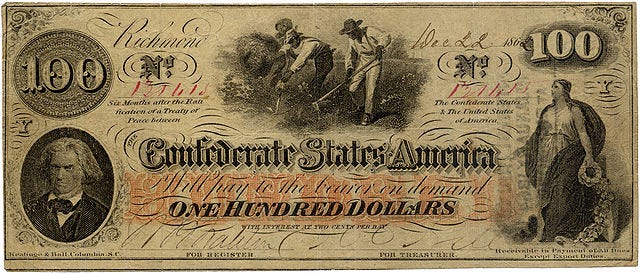
Here’s why the historical analogy matters. The original Lost Cause took a full generation to build and over a century to partially dismantle. The first Confederate monuments were erected between the 1890s and 1920s by the United Daughters of the Confederacy and codified in the academy by the Dunning School, which was dramatized by Thomas Dixon and The Birth of a Nation, and then eventually baked into public school textbooks from Mississippi to Maine. Most of them didn’t come down until after 2015 (and some resurrected). That’s a hundred-plus-year lifecycle for a mythology built to flatter the losers of a war. If Trump’s election-theft narrative has even half that staying power, the idea that a podcast apology unwinds it is, historically speaking, cute.
That kind of narrative, once lodged in the minds of a plurality of Americans, survives news cycles. It survives polling with its own sampling and framing errors. And it keeps enough Americans loyal to Trump that middle-of-the-road swing voters will stay reluctant to seriously challenge the Trumpian revolution unfolding around them.
We are only six years into a decade that started with a successful lie about American democracy, backed by White supremacist pageantry, and led to a violent assault on the Capitol, where Confederate flags flew on the lawn. We haven’t yet metabolized what that election did to the American psyche, or how it eviscerated the old narrative playbook. This is where I find Last’s analysis refreshing despite my many disagreements with him regarding neoliberalism and neoconservatism.
At least he’s attempting to tap into the structural darkness that may not sell a brand, but can tell the true history of a nation built on empire, exploitation, slavery, and marketing myths.
Good stuff. Thank you.
I call BS on Tucker. I refuse to believe he's 'seen the light' and should be redeemed. It'll take decades to convince this senior he's not on a publicity junket trying to rehab his image for a new set of followers to pollute and mind-bend. He's washed up political garbage and abnormal like the rest of the GOP.